
A favorite necklace may be worn every day, while a family ring comes out only for special occasions. Both can lose their appearance or suffer damage when cleaning products, heat, or careless storage become part of the routine. Useful jewelry care guidance begins with a simple principle: identify the materials before deciding how to clean them. A method that suits one diamond ring may harm a pearl strand or a treated emerald.
You do not need a drawer full of expensive equipment to look after most pieces. You need gentle habits, a safe storage system, and the judgment to leave uncertain cleaning jobs to a professional. This guide offers practical jewelry care guidance for American households, with important differences between metals, gemstones, and delicate heirlooms.
Start by Identifying Every Material
A piece of jewelry may combine several materials: a gold setting, a gemstone, an adhesive, and a decorative finish. Cleaning advice should account for its most vulnerable component rather than only the strongest one. A diamond may resist scratching, for example, while its setting may have a loose prong or a sensitive coating.
Before following jewelry care guidance from a product label or social media, check the purchase receipt, any gemstone report, and the jeweler’s instructions. Ask whether the stones have been treated and whether a finish is plated rather than solid. The Federal Trade Commission explains that certain gemstone treatments should be disclosed when they affect care or durability. Consumer Advice If you cannot confirm what a stone is, choose minimal handling until a qualified jeweler can advise you.
Learn the Difference Between Hardness and Toughness
Hardness describes resistance to scratching, while toughness concerns resistance to breaking or chipping. These properties are not interchangeable. A very hard gemstone can still be damaged by an impact, and a strong-looking setting can loosen during ordinary wear. That is why jewelry care guidance should never reduce protection to a single number on the Mohs hardness scale. GIA 4Cs
Build a Gentle Cleaning Routine
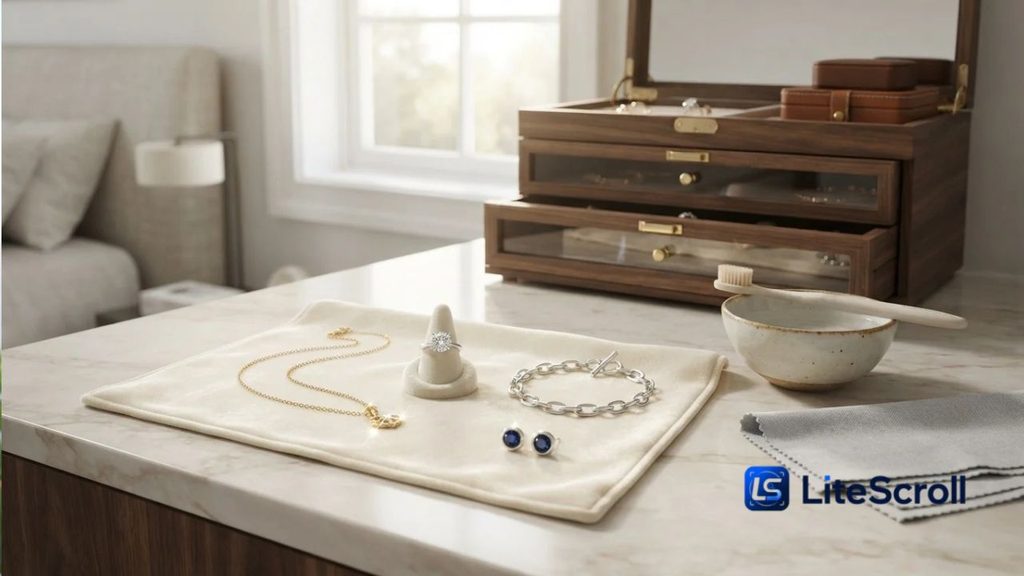
For many suitable pieces, a soft, lint-free cloth removes fingerprints and surface oils after wear. When the manufacturer approves washing, a small bowl of lukewarm water, a little mild soap, and a very soft brush may be appropriate. Clean over a padded surface and rinse in a separate container rather than directly over an open drain.
Reliable jewelry care guidance does not mean washing everything together. Inspect a piece first for loose stones, damaged claws, fraying thread, or fragile finishes. Never scrub a compromised setting, because brushing can dislodge a stone. Dry the piece thoroughly according to its materials before returning it to storage.
Avoid Household Cleaning Shortcuts
Bleach, harsh solvents, abrasive powders, and unsuitable polishing compounds can harm precious metals, coatings, or stones. Homemade methods involving toothpaste or aggressive scrubbing can leave scratches rather than restore shine. A cleaning hack that works for one metal may permanently damage another material.
Treat jewelry care guidance promising a universal solution with skepticism. The Gemological Institute of America (GIA) specifically warns that chemicals found in cosmetics, household cleaners, and chlorinated pools can affect metals and vulnerable gems. gia Take jewelry off before cleaning the house or swimming, and apply perfume or hairspray before putting delicate pieces on.
Care for Gold, Platinum, and Silver Differently
Gold and Platinum Settings
Solid gold and platinum settings can often be wiped with a clean, soft cloth, but the attached stones and surface treatments determine whether washing is suitable. White gold may have a rhodium finish that gradually wears with use. Plated pieces need additional care because vigorous polishing can remove the coating.
For daily-wear rings, jewelry care guidance should include checking prongs and looking beneath the stone for trapped lotions. Do not force a brush into a narrow setting. Ask a professional about damaged finishes, deep scratches, or a ring that suddenly feels sharp around its stones.
Sterling Silver and Tarnish
Sterling silver can develop surface tarnish through reactions with substances in the surrounding environment. A suitable silver-polishing cloth may help with simple, unadorned pieces, but abrasive polishing is a poor choice for deliberately oxidized finishes, plating, or delicate gemstone settings. Product-specific instructions take priority.
Good jewelry care guidance for silver includes storing pieces individually in a clean, suitable anti-tarnish pouch or cloth. Keep damp items out of sealed containers and avoid rubbing ornate crevices aggressively. If a silver piece contains pearls, porous gems, or glued decorations, have the entire construction assessed before cleaning.
Give Diamonds and Colored Stones the Right Attention
Diamonds Still Need Careful Handling
Diamonds resist scratching better than most gemstones, but jewelry containing diamonds is not indestructible. Oils and residue can reduce visible sparkle, and prongs can bend or loosen. GIA notes that ultrasonic and steam cleaners may loosen stones in their settings, even when the gemstone itself tolerates the cleaning method. gia
Diamond-specific jewelry care guidance is therefore about the whole ring, not just its center stone. For an intact, uncomplicated ring that its jeweler approves for washing, use a gentle method and avoid sudden impacts. If you suspect damage, skip home cleaning and arrange an inspection first.
Emeralds, Opals, and Treated Gems
Emeralds frequently contain surface-reaching features that may be filled with oils or resins. Ultrasonic vibration and steam can affect those fillers, according to GIA. Opals can also be vulnerable to temperature changes and impacts; their care depends on the particular opal and any treatments or composite construction. gia+1
The most responsible jewelry care guidance for colored stones is to ask what treatments are present before exposing them to heat, chemicals, or machines. An untreated sapphire and a filled emerald do not necessarily belong in the same cleaning routine. If the retailer cannot explain a stone’s care requirements, seek an independent expert’s assessment.
A Note on Vintage and Inherited Pieces
Antique jewelry may have delicate settings, older adhesives, or repairs that are not obvious to the eye. Even when its gemstone is generally durable, the complete piece may not be. Keep vintage and heirloom items away from home ultrasonic machines and unverified cleaning mixtures unless an experienced professional has examined them.
Protect Pearls and Other Delicate Materials
Pearls have a comparatively soft surface and can be affected by perfumes, cosmetics, and rough objects. Wipe them gently after wearing and store them separately from harder gemstones. Avoid ultrasonic or steam cleaning. If a pearl strand has silk thread, professional cleaning and restringing may eventually be appropriate. gia
For pearls, jewelry care guidance is as much about handling as washing. Let lotions and fragrances dry before putting on a necklace, and remove it before exercising or bathing. If a strand becomes wet, let it dry flat on a clean towel before putting it away. Do not hang a wet strand where the thread may stretch.
Watch Heat, Light, and Humidity
Some colored gems can fade with prolonged intense light, while heat and abrupt temperature changes can damage certain materials. GIA identifies pearls and opals among the materials that require particular environmental attention. Their needs also complicate simplistic advice to keep every precious item in the driest possible location. gia
Appropriate jewelry care guidance favors a stable environment away from direct heat and unnecessary sunlight. Avoid damp bathrooms, windowsills, and locations with dramatic temperature swings. For a valuable or unusual piece, ask a jeweler about suitable storage conditions instead of guessing from general rules.
Store Each Piece So It Cannot Harm Another
The quickest way to cause small scratches is to toss jewelry into a common drawer. Separate hard gemstones from softer ones, close necklace clasps to reduce tangles, and use padded compartments for rings and earrings. A compact organizer can be effective without being expensive.
At-home jewelry care guidance should include one predictable storage location for daily pieces and another secure place for valuable items worn less frequently. Use suitable anti-tarnish storage for silver, but do not automatically keep pearls or opals in a very dry sealed environment. Pack items separately for travel so movement cannot cause abrasion.
Maintain a Simple Inventory
Photograph valuable pieces, record distinctive details, and keep purchase documents or grading reports where you can find them. This can help with service appointments, insurance discussions, and identifying a missing item. Store sensitive records securely rather than leaving them inside a travel case.
Prevent Damage During Everyday Activities
Take rings off before activities that could strike or bend settings, including heavy lifting, some sports, and hands-on repairs. Remove vulnerable pieces before swimming, using cleaners, or applying chemicals. Consider how bracelets and necklaces may catch on clothing, equipment, or bags.
Realistic jewelry care guidance focuses on routines you can remember. Keep a small lined tray in a safe place for removing jewelry before chores, but avoid leaving valuable pieces beside sinks or public changing areas. Put delicate accessories on after cosmetics and take them off before activities likely to expose them to impact or chemicals.
Know When Professional Help Is Worth It
A jeweler can inspect prongs, clasps, mounting security, and wear that is difficult to assess at home. GIA suggests periodic checks, often around every six months, although frequency should reflect the jewelry and how it is worn. Do not wait for a stone to fall out before asking about a loose or snagging setting. gia
Professional jewelry care guidance becomes especially valuable when a piece contains unknown treatments, glued components, fragile gems, or historical materials. Ask what cleaning method the professional plans to use and why. A trained jeweler should be able to explain the risks and recommend a conservative approach when identification is uncertain.
Create a Maintenance Schedule You Can Keep
After wearing, check for obvious dirt, damage, and snagging, then wipe an appropriate piece with a soft cloth. Once in a while, inspect clasps and settings without pulling on them. Arrange a professional inspection when you notice a change, before a special occasion, or at intervals that suit the item’s use.
For a broader explanation, see GIA’s jewelry care guidance, which covers light, heat, chemical exposure, treated gemstones, cleaning devices, and safe storage. Use its recommendations alongside the instructions for your particular piece. That combination is more reliable than expecting one method to protect everything in a jewelry box.
Frequently Asked Questions
Can I wash every ring with soap and water?
No. Some intact jewelry can be gently cleaned that way, but pearls, delicate finishes, treated stones, adhesives, and damaged settings may need different methods. Jewelry care guidance should be specific to the whole piece, not only its metal type.
Are ultrasonic cleaners safe for diamonds?
They are not automatically safe for every diamond ring. Vibration can loosen settings, while certain gemstone treatments and accompanying stones may be unsuitable for ultrasonic cleaning. Ask a professional to examine the complete piece before using a machine.
What is the best way to keep silver from tarnishing?
Store clean, dry silver in suitable anti-tarnish storage and keep pieces separate. Avoid exposing it unnecessarily to chemicals and moisture. Jewelry care guidance for silver with gemstones must also account for the stones and any decorative finishes.
How often should an engagement ring be inspected?
GIA recommends periodic professional checks, commonly about every six months. A heavily worn ring or a piece with suspected damage may need attention sooner. If a stone rattles or a prong snags, stop wearing it until a jeweler checks the setting.
Should pearls be stored in an airtight box?
Not as a blanket rule. Pearls require protection from scratching and harsh conditions, but extremely dry environments can be problematic. Store them in a soft pouch in a suitable setting and follow the advice provided for the particular strand.
Does jewelry require different care when traveling?
Yes. Pack pieces in individual padded compartments, avoid tangling chains, and think about security and exposure to heat or chemicals. Practical jewelry care guidance also means carrying only the pieces you expect to wear and keeping valuable items under appropriate supervision.
Conclusion
Keeping jewelry beautiful begins with knowing what each piece contains and how it was made. Apply jewelry care guidance conservatively: choose gentle cleaning, prevent chemical and impact damage, and give delicate stones separate storage. When materials or treatments are uncertain, a qualified jeweler is a better resource than a universal cleaning hack. Consistent small habits can help preserve both everyday favorites and sentimental heirlooms.