
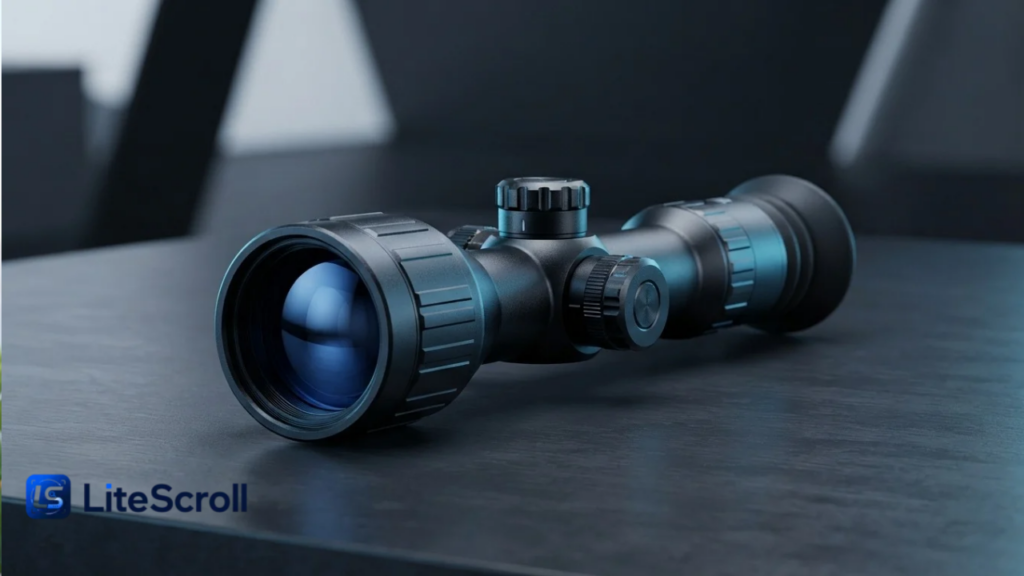
Digital optical technology has changed how people examine landscapes in difficult lighting. Instead of relying only on light passing directly through glass, electronic viewing systems capture a scene through a sensor and present it on a small display. Alpex day and night vision scopes belong to this category, combining a conventional-looking optical housing with digital imaging features. Understanding what those features mean is more useful than assuming every model performs identically.
This guide explains the technology behind Alpex day and night vision scopes, the differences between current product families, and the limitations of viewing in poor light. It also addresses care, manufacturer specifications, and legal responsibilities in the United Kingdom. The purpose is to clarify digital optics, not to offer operational shooting advice or imply that owning a device grants permission for any particular activity.
What Makes This Range Different From Ordinary Glass Optics?
A traditional optical scope forms an image primarily through its lenses and presents that image directly to the eye. A digital model uses an image sensor, processor, and electronic screen. That arrangement supports adjustable display modes, image enhancement, and electronic recording, but it also introduces power requirements and processing limitations. Alpex day and night vision scopes use this digital approach in housings resembling familiar tubular optical equipment.
How Electronic Imaging Works
Light enters an objective lens and reaches an electronic sensor. The device processes signals from that sensor and displays the result electronically. Resolution describes one part of the image pipeline, but the quality of the lens, sensor sensitivity, processing, screen, and available light all affect what the observer actually sees. When discussing Alpex day and night vision scopes, separate the sensor’s advertised pixel count from the resolution of the internal viewing display.
Daylight, Twilight, and Darkness Are Different Conditions
During daylight, digital equipment can present a colour image because sufficient visible light reaches its sensor. At twilight, image processing becomes increasingly important. In darkness, some systems depend on compatible infrared illumination; that is different from producing an image without light of any kind. Alpex day and night vision scopes should therefore be understood as digital low-light devices, not as identical substitutes for thermal cameras.
Environmental factors matter too. Rain, mist, reflective surfaces, and nearby bright lights can change image quality. An attractive promotional scene does not replace careful attention to the conditions in which an image was captured.
Understanding the Different ALPEX Families
HIKMICRO’s UK collection currently groups several related products rather than a single specification. The official Alpex day and night vision scopes collection provides the manufacturer’s current catalogue and model names. Its listings distinguish ALPEX 4K Lite, ALPEX 4K, and ALPEX Pro variants, including versions with an integrated laser rangefinder. Availability and model configurations can change, so historical reviews should not be treated as an up-to-date catalogue. 4K, Lite & LRF Models UK
The Compact 4K Lite Family
The Lite series is presented as a more compact member of the range. Manufacturer material describes a 4K-class digital imaging platform in a lighter housing, while the UK listings distinguish models with and without a rangefinder. That distinction matters when interpreting a specification sheet: two products sharing the word “Lite” do not necessarily have the same functions. Discussions of Alpex day and night vision scopes are clearer when the complete model identifier is included. hikmicrotech.com
The Established 4K Family
The ALPEX 4K A50E product information describes a 3840 × 2160 CMOS sensor and a 50 mm objective. The UK manufacturer also identifies an A50EL version with an integrated rangefinder. These are specific product attributes, not a claim that every item in the family shares identical hardware. For Alpex day and night vision scopes, look beyond the headline “4K” and compare the full published data for the relevant model. HIKMICRO UK+1
The manufacturer lists a display resolution separately from sensor resolution, illustrating why those numbers should not be confused. A sensor records incoming detail, while the screen determines how processed imagery is presented to the eye. Neither figure alone establishes how useful the picture will be in challenging weather or very low light.
The Newer Pro Family
HIKMICRO introduced the ALPEX Pro generation in February 2026. Its manufacturer information describes a 12-megapixel sensor and a revised imaging system. The UK catalogue distinguishes the A50P from the A50PL variant. These details help explain how the product range has evolved, but they do not justify claiming that one device will always produce a better image in every situation. hikmicrotech.com+1
Anyone researching Alpex day and night vision scopes should consider the publication date of comparisons. A review written before the Pro launch cannot evaluate it, and an older product photograph might not show the equipment currently listed by the retailer. Manufacturer documentation is the best starting point for confirming what a named variant actually contains.
Features That Shape the Viewing Experience
Specifications are useful when interpreted together. An electronic viewing system should be judged as a chain: lens, sensor, processing, screen, power supply, and environmental protection. A weakness at one stage cannot always be overcome by a larger number elsewhere. With Alpex day and night vision scopes, independent evaluations would need consistent conditions to support direct performance claims.
Sensor Resolution Versus Screen Resolution
Higher pixel counts allow more detail to be sampled under suitable conditions. They do not guarantee better low-light results without enough incoming information. Screen characteristics, contrast, refresh behaviour, and processing all affect how natural a digital image appears. When reading about Alpex day and night vision scopes, check whether a particular resolution figure belongs to the sensor, recorded media, or internal display.
Visible Light and Infrared Illumination
Infrared illumination can help certain digital night-vision systems create an image where ambient visible light is insufficient. The illumination source and environment affect the result, and use may be regulated in particular contexts. Unlike thermal imaging, conventional digital night vision generally depends on reflected light, whether visible or infrared. Alpex day and night vision scopes should not be described as devices that independently measure heat signatures.
Power, Recording, and Weather Protection
Electronic screens, sensors, and processors require power. Manufacturer-stated battery duration is typically measured under specified conditions, while cold temperatures, settings, and accessory use can alter practical runtime. Recording and connectivity features also vary by model. Anyone comparing Alpex day and night vision scopes should check the exact product manual before assuming that every device supports the same storage or connection options.
Weather resistance deserves similar care. A published ingress-protection classification describes testing to a standard, not unlimited durability. Follow documented charging, cleaning, storage, and moisture precautions even when the enclosure is designed for outdoor conditions.
Why the Whole Specification Sheet Matters
A responsible comparison notes model number, sensor specification, display, power arrangement, ingress rating, software support, and any accessory-dependent functions. This prevents a short marketing headline from obscuring important differences between generations. It also helps keep claims about Alpex day and night vision scopes precise and verifiable.
How Digital Night Vision Differs From Thermal Imaging
The terms are often confused because both technologies may be associated with darker environments. Digital night vision typically generates imagery from reflected visible or infrared light. Thermal imaging detects differences in emitted infrared radiation associated with temperature. The results can look very different, and one image type should not be presented as direct proof of what the other can show.
Alpex day and night vision scopes are part of the digital optical category. They are not the same as HIKMICRO’s separate thermal product families. This difference matters when reading reviews, interpreting sample photographs, or comparing marketing descriptions. The technologies have distinct strengths and limitations, and no single description of “night vision” covers all electronic observation equipment.
Understanding the UK Legal and Ethical Context
Because the supplied collection is a UK site and the equipment is sold as riflescopes, legal context cannot be ignored. Rules for firearms, wildlife, protected species, permitted equipment, and activity after dark vary across the UK’s jurisdictions and by the particular activity. Possessing Alpex day and night vision scopes does not itself establish that a proposed use is lawful.
Check the Rules for the Specific Activity
In England, Natural England publishes conditions for licensed deer control at night, including circumstances in which authorised equipment may be used. That is a controlled, permission-based framework rather than blanket approval for night shooting. The Wildlife and Countryside Act also contains restrictions protecting particular species and regulating specified methods. Always consult current official rules and relevant authorities instead of treating a product description as legal advice. GOV.UK+1
For Alpex day and night vision scopes, this means separating a device’s technical capability from the user’s legal authority. Rules may differ in Scotland, Wales, and Northern Ireland. Land access, wildlife protections, firearms certification, and other permissions can require independent consideration.
Privacy and Responsible Observation
Electronic optics can reveal details that ordinary eyesight would miss. Avoid observing people or private property intrusively, respect access rights, and do not assume low-light technology removes safety risks. Technical imagery may also be ambiguous; an unclear display should never be treated as a reliable basis for identifying a person, animal, or distant object.
Caring for Sensitive Electronic Optics
Good maintenance starts with the manufacturer’s instructions. Clean exterior lenses only with materials suitable for optical coatings, and remove loose grit before wiping. Avoid strong household chemicals, abrasive cloths, unnecessary moisture, or improvised attempts to open sealed assemblies. Alpex day and night vision scopes contain electronics that may be damaged by unsuitable cleaning or storage practices.
Storage and Software Housekeeping
Store equipment somewhere dry and within its stated temperature limits. Check guidance for rechargeable batteries and avoid leaving accessories under prolonged direct heat. If firmware updates are offered, obtain them from official manufacturer channels and read the release notes before proceeding. Owners of Alpex day and night vision scopes should also retain the specific model number and purchase documentation for warranty and support enquiries.
Routine exterior inspections can reveal damaged seals, loose covers, or moisture that merits professional assessment. Do not interpret weather-resistant construction as permission to neglect maintenance.
Common Questions About the Technology
Are these electronic devices the same as thermal cameras?
No. Alpex day and night vision scopes use digital optical imaging, while thermal cameras detect temperature-related radiation. Their resulting pictures convey different information, and descriptions of one technology should not be applied automatically to the other.
Does a higher sensor resolution always mean clearer images?
No. Lens performance, ambient light, processing, and display characteristics still matter. Alpex day and night vision scopes may have different sensor specifications across generations, but pixel count alone cannot establish every aspect of real-world image quality.
Can digital optics display colour after sunset?
Some digital systems retain colour under suitable remaining light, while darker conditions may require another display mode or compatible illumination. Results depend on conditions and device capabilities. Check the model’s documentation rather than expecting constant colour performance.
Are all ALPEX models identical apart from price?
No. The manufacturer distinguishes Lite, 4K, and Pro families, with further model-specific differences. Alpex day and night vision scopes therefore need to be identified by complete model designation when discussing technical features or support documentation.
Does owning a night-vision riflescope authorise nighttime shooting?
No. Ownership and lawful use are separate issues. Requirements vary by jurisdiction, wildlife species, location, and the planned activity. Check current government guidance and obtain any necessary licences or permissions before undertaking regulated activities.
What is the safest way to maintain the lenses and housing?
Follow official care instructions, use suitable optical cleaning materials, and avoid exposing electronics to moisture outside their published limits. Alpex day and night vision scopes should be serviced by qualified support providers if physical damage or internal faults are suspected.
Conclusion
Digital imaging has brought new capabilities to familiar optical designs, but clear terminology remains essential. Alpex day and night vision scopes illustrate how sensor technology, processing, and display systems combine, while model differences and changing generations make precise documentation important. Understand the distinction between digital and thermal imaging, respect UK laws and privacy, and follow manufacturer care guidance. Informed evaluation begins with verifiable specifications rather than broad promises about what electronic optics can achieve.