
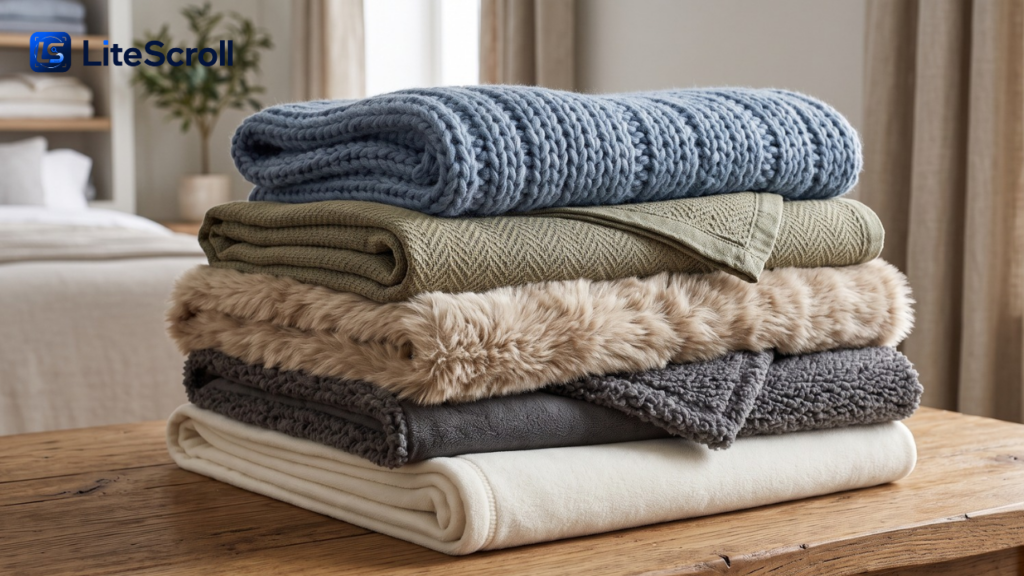
A chilly evening can make even a beautiful bedroom feel unfinished. The right winter blankets add a comfortable layer without forcing you to replace every piece of bedding or turn up the heat. Yet shopping for one is not as simple as choosing the thickest-looking fabric. Warmth, breathability, dimensions, texture, and cleaning instructions all affect whether a blanket becomes a daily favorite or stays folded in a closet.
This guide explains how to compare popular materials, choose sizes, build flexible bedding layers, and evaluate online collections.
Understand What Actually Makes a Blanket Feel Warm
A blanket helps reduce heat loss by holding layers of relatively still air near the body. Fabric thickness matters, but the fiber, construction, fit, and surrounding room temperature also influence comfort. Two similarly thick winter blankets may feel different because one has a lofty pile while the other uses a tighter weave.
Balance Insulation With Breathability
People who feel cold when they first lie down may enjoy a plush upper layer. Those who become warm during the night might prefer a breathable cotton base with an extra throw they can remove. Choosing winter blankets should account for your sleeping habits and the temperature of the room, rather than a product description promising maximum warmth.
Look Beyond Marketing Words
Terms such as cloud-soft, luxurious, or ultra-cozy describe an intended feeling, not an independently standardized warmth rating. Check the construction, fabric content, dimensions, and care details.
Compare the Main Fabrics and Textures
Material choice changes the way a blanket drapes, traps warmth, handles laundry, and fits a room’s visual style. When comparing winter blankets, start with the feeling you prefer against your skin and the level of maintenance you can realistically manage.
Fleece and Microfiber for Easy Everyday Comfort
Polyester fleece is often soft, relatively lightweight, and convenient for regular use. Microfiber blankets can have a smooth or plush surface depending on the weave and finishing process. Many winter blankets in these categories can be machine washed, but individual instructions take priority over general advice.
Sherpa and Plush Finishes for a Cozy Feel
Sherpa-style fabric is designed to resemble a fluffy, wool-like pile, frequently paired with a smoother opposite side. That texture can feel particularly inviting on a couch or over existing bedding. Some winter blankets feature reversible surfaces, allowing a plush side for lounging and a different texture for appearance.
Faux Fur for Decorative Texture
Faux fur brings depth to a neutral sofa or the foot of a bed. It may feel indulgent, but pile length and backing materials influence weight and care. If you are choosing winter blankets primarily for decoration, consider whether the fabric sheds, how it responds to washing, and whether it works around pets. Faux fur should not be confused with genuine animal fur solely because the listing uses descriptive names.
Cotton and Wool for Different Priorities
Cotton is a useful option for sleepers who prefer a breathable woven layer, especially when combining several coverings. Wool can provide insulation and moisture-management characteristics, but fiber blends, sensitivities, and specialized care need consideration. Not all winter blankets are made for heavy insulation: a cotton blanket may work best as a flexible layer beneath a duvet rather than as a stand-alone covering on a freezing night.
Check the Fiber Label Before Making Assumptions
In the United States, the FTC explains that most covered textile and wool products must identify fiber content and other required information. Read that information on the actual item or seller’s specifications, especially when titles mix terms such as velvet, fleece, and sherpa. Federal Trade Commission
Choose Dimensions for the Bed or Sofa
A throw intended for an armchair may be too short for an adult sleeping in a queen-size bed. Measure before purchasing, because brand labels such as queen and king are not always used consistently across decorative blankets. The most useful winter blankets provide enough coverage for their intended purpose without excess fabric dragging on the floor.
Throws for Lounging and Reading
For a couch, decide whether one person will use the blanket while sitting or whether two people want to share it. A compact throw is easier to store and carry, while a larger size offers better leg and shoulder coverage. If winter blankets are mainly for movie nights, softness and convenient washing may matter more than a perfectly tailored bed-like drape.
Bed Blankets for Complete Coverage
Consider mattress thickness and whether the blanket will sit under a comforter. Casa & Beyond, for example, lists some designs in several measured sizes rather than relying on a single universal dimension. Check the actual product’s size chart before adding it to your cart. Casa & Beyond.
Build Layers Instead of Relying on One Heavy Cover
Layering allows you to adjust warmth when weather changes or when two people prefer different sleeping temperatures. A breathable sheet, a comfortable mid-layer, and an optional plush throw can be easier to manage than an extremely heavy covering. This approach also lets winter blankets serve more than one season.
Start With the Layer Closest to You
Use the fabric that feels best against your skin, and put bulkier textures above it if you dislike direct contact with thick pile. For a guest room, keep an extra washable blanket available so visitors can adjust the bedding themselves.
Adjust for Overnight Temperature Changes
A bedroom that feels cold at bedtime may become warmer once heating turns on. Keep a removable layer within reach. Families selecting winter blankets for shared spaces can keep one lightweight option and one plush option rather than assuming everyone enjoys the same fabric weight.
Match the Blanket to Your Room and Routine
A bedroom blanket and an everyday sofa throw may look similar online, but they serve different purposes. Before purchasing winter blankets, consider where the fabric will spend most of its time and how often it will need cleaning.
Bedrooms Need Comfort and Easy Changes
A bed may benefit from a full-coverage blanket in a simple color that complements existing duvet covers. Neutral shades are flexible, while textured patterns add interest without requiring additional decor. Choose seams and finishes that will remain comfortable when the blanket is tucked in or folded.
Living Rooms Benefit From Practical Throws
If children or pets regularly share the couch, consider a fabric that can be washed according to its label. Winter blankets in medium shades or subtle patterns may help disguise everyday lint between routine cleanings, though no color makes an item stain-proof.
Guest Spaces Need Flexibility
Guests vary in preferred warmth. Store clean extra blankets where they are easy to find and provide enough choices without overcrowding the bed.
Explore a Collection Without Assuming Every Item Is Identical
A large online catalog may mix bedding essentials, sofa throws, and seasonal products. Shoppers exploring winter blankets can review Casa & Beyond’s broad blankets collection, which includes cotton styles, a Snuggle Sherpa option, and fleece designs. The retailer also maintains a separate seasonal winter collection featuring plush and faux-fur products. Casa & Beyond.+1
Compare Product Pages Rather Than Category Names
A useful example is the retailer’s Plaid Embossed Grid Pattern Winter Blanket page, which describes a double-layer microfiber blend and lists several measured sizes and cold-water care instructions. That information applies to the named product, not automatically to the retailer’s entire selection. Before ordering winter blankets, verify the chosen color, size, material description, and care requirements on the current listing. Casa & Beyond.
Plan for Washing, Drying, and Storage
A soft blanket can become a burden if it requires more upkeep than your household can provide. Read the product’s instructions before washing, particularly for faux fur, wool, textured surfaces, or pieces with decorative trim. Routine care matters when winter blankets are used repeatedly through a long cold season.
Avoid Excessive Heat and Harsh Products
Many washable synthetic blankets recommend a gentle cycle and low-temperature drying, but the precise instructions differ. The referenced Casa & Beyond microfiber product advises washing separately in cold water, avoiding bleach, and drying completely before storage. Never apply that regimen universally to unrelated fabrics. Casa & Beyond.
Store Only When Thoroughly Dry
Fold clean, fully dry blankets in a breathable, protected space away from persistent moisture. Avoid prolonged compression of highly plush fabrics if it crushes the pile. If you notice an unfamiliar odor or discoloration, address the cause before returning the blanket to a closed storage container.
Evaluate Value Beyond the Discount Tag
Sales make seasonal shopping tempting, but the original crossed-out price is not a measurement of performance. Compare usable dimensions, material composition, construction, and the number of washes the item is likely to experience. Two winter blankets with similar prices may offer very different coverage or care requirements.
Confirm Delivery and Return Conditions
Check the live retailer policy for your destination, order timing, return eligibility, and any costs associated with exchanging a color or size. Do not assume the policy on one product page applies unchanged to custom, clearance, or different-category items. Save the product details and confirmation email so you can resolve a size discrepancy quickly.
Make a Shortlist You Can Actually Compare
Choose two or three options within your budget. Record the measured size, fiber content, texture, washing method, and delivered price. For winter blankets, a short comparison often reveals more useful differences than browsing dozens of nearly identical photographs.
Avoid Common Buying Mistakes
The most frequent errors are easy to prevent: shopping by appearance alone, ignoring size measurements, assuming a fluffy surface always means better warmth, and forgetting that fabric care affects long-term enjoyment. When selecting winter blankets, try to answer three questions: Where will I use this, how warm do I need it to feel, and how will I clean it?
A dark, thick throw can look perfect in a styled image and still feel uncomfortable to someone who sleeps hot. Your real routine should decide the purchase.
A Quick Checklist Before Checkout
- Measure the intended bed or seating area and compare it with actual product dimensions.
- Identify the fiber content, fabric construction, and desired degree of plushness.
- Decide whether the blanket is for sleeping, lounging, decoration, or guests.
- Read the washing and drying instructions for the exact product.
- Compare full delivered cost, current availability, and applicable return terms.
- Choose a color and texture that work with your existing room rather than one photograph.
Frequently Asked Questions
Which fabric feels warmest on a cold evening?
There is no universal winner. Dense, lofty plush materials can feel especially cozy, while wool, fleece, and layered fabrics offer different comfort characteristics. Choosing winter blankets depends on room temperature, construction, and personal preference, not only fiber names.
Are cotton options suitable during colder months?
Yes, particularly as a breathable layer used with a comforter or plush throw. Cotton alone may not provide the insulation someone wants in a very cold room, so adjust the combination to your needs.
What size works best for a couch?
It depends on whether one person wants to cover their legs or two people plan to share. Check measured dimensions rather than shopping by a generic throw label. Larger winter blankets can offer extra coverage but may be bulkier to store.
Can plush fabrics go into a washing machine?
Some can, but others require special handling. Read the specific care instructions, avoid unnecessary heat, and follow drying guidance. Do not assume all sherpa, fleece, and faux-fur products are maintained identically.
Should I buy one thick blanket or several lighter layers?
Layering offers more flexibility as room temperatures change, while a thicker single blanket can feel simpler. If you share a bed with someone who prefers different warmth, removable layers are often worth considering.
How do I make a blanket purchase last longer?
Choose appropriate dimensions and construction, follow the care guidance, avoid damaging heat or cleaners, and store the blanket completely dry. Well-chosen winter blankets should fit your daily routine rather than demand unrealistic maintenance.
Conclusion
Comfortable cold-weather bedding begins with the right fit, fabric, and intended use. The most useful winter blankets combine practical coverage with a texture you enjoy and care instructions you can follow. Compare product-specific details, build flexible layers, and resist choosing only by photographs or discount claims. A thoughtful purchase can make bedrooms, couches, and guest spaces feel inviting throughout the colder months.