
A building can have modern alarms and still present serious evacuation problems if occupants cannot reach a safe exit. NFPA 101 provides a framework for assessing how construction, protection systems, and building use work together to protect people from fire and related emergencies. It is relevant to new facilities and existing buildings, but applying it correctly requires more than finding a checklist online.
The essential questions are practical: Who uses the building? Which edition has legal effect? Can people move to safety under realistic conditions? And who is authorized to decide whether a design complies? This guide explains those questions for U.S. property owners, facility managers, designers, and building teams without substituting for a code review by qualified professionals.
Understand the Purpose Before the Details
The Life Safety Code addresses features intended to reduce risks to occupants, including safe exit routes, protective construction, alarm and detection functions, and provisions shaped by building occupancy. Its value comes from considering these features together. A functioning alarm cannot compensate for a blocked exit, and a clearly marked door is of limited use if the path beyond it is unsafe.
When teams consult NFPA 101, they should consider both the physical building and its operation. Furniture arrangements, security procedures, maintenance, employee training, and changes in room use can alter how protective features perform. Compliance is not something that can be assessed once during construction and then forgotten.
Confirm Which Edition Actually Applies
A frequent mistake is assuming the newest published edition is automatically the law everywhere. NFPA develops model codes; governments and other authorities may adopt specific editions, sometimes with amendments. A building can therefore be subject to requirements that differ from the latest published text.
The Latest Publication and Local Adoption
As of November 2026, NFPA identifies the 2027 edition as the current published edition of NFPA 101. The publisher’s overview highlights updates concerning detection provisions and references for remote inspections. Those developments are worth understanding, but publication itself does not establish which requirements a particular U.S. city or state enforces. NFPA+1
Before applying NFPA 101 to a project, confirm the adopted edition and applicable amendments with the local building or fire authority. Note whether other codes, permits, or licensing rules also govern the property. Document the answer in the project record so everyone works from the same basis.
Healthcare May Follow a Different Rule Set
Healthcare facilities illustrate why edition selection matters. The Centers for Medicare & Medicaid Services describes compliance with the 2012 edition of the Life Safety Code for covered Medicare and Medicaid provider and supplier requirements, subject to the applicable regulations and policies. A newer publication does not automatically replace that regulatory reference. CMS
For healthcare teams, NFPA 101 should be reviewed alongside relevant CMS provisions, state requirements, facility licensing, and the authority having jurisdiction. Do not assume a general commercial-office checklist is suitable for a hospital or long-term care setting.
Identify the Correct Occupancy Classification
Requirements change with how a building or space is used. Offices, assembly halls, schools, healthcare facilities, hotels, and residential properties can present different occupant characteristics and evacuation challenges. Correct classification is a foundational step, not an administrative formality.
NFPA 101 contains occupancy-focused provisions that work with its broader requirements. The number of occupants, their ability to evacuate independently, the configuration of the building, and whether it is new or existing can affect which provisions are relevant. A dining space added inside an office may raise questions that were not present in the original fit-out. NFPA
Mixed Uses and Changes of Occupancy
Some buildings contain more than one use. A development could include retail areas beneath apartments, or a community facility might include offices and an event hall. Such projects need an informed evaluation of the relevant occupancy provisions and how different areas relate to each other.
A change in tenants, event capacity, or intended use can also require a fresh review of NFPA 101 and other locally adopted rules. Do not rely on an old certificate or the previous tenant’s layout without checking whether the conditions remain valid.
What to Ask the Reviewing Authority
Confirm the approved occupancy, applicable edition, permitted occupant load, existing-building status, and any special conditions or approved alternatives. Request clarification in writing when interpretations affect construction. The authority having jurisdiction, often abbreviated AHJ, is the appropriate point of contact for enforceable local decisions.
Look at the Complete Escape Route
A means of egress is more than an exit sign. It describes the route people use to move from an occupied space toward safety. In general terms, the route includes exit access, the exit itself, and exit discharge toward a safe destination. Each stage needs to function under the conditions expected for that building.
When applying NFPA 101, evaluate the full journey rather than inspecting each door in isolation. Storage in a corridor, an improperly secured exit, or a rearranged reception desk can undermine an otherwise sound plan. Required widths, arrangements, distances, and exit counts depend on the applicable provisions, so avoid copying generic numerical rules from another occupancy or edition. NFPA
Doors, Signs, and Lighting
Door operation and hardware should allow occupants to use required exits in accordance with applicable rules. Exit signs and emergency lighting help people recognize and navigate the route, including when normal power is lost. The exact requirements are occupancy- and condition-specific and should be confirmed in the adopted code.
NFPA 101 addresses means of egress features such as illumination and identification. A useful inspection looks for blocked access, damaged signs, poor visibility, inoperative lighting, and doors that no longer operate as intended. Address unsafe conditions promptly through qualified personnel and the proper facility procedures.
Accessible Movement and Assistance
Evacuation planning must consider people with mobility, sensory, or other access needs. Depending on the facility, protective strategies may involve accessible routes, areas of refuge, staff assistance, or relocation arrangements. These issues intersect with accessibility law and other building requirements; one code alone should not be treated as the complete accessibility framework.
Teams reviewing NFPA 101 should involve professionals familiar with accessible design and the particular occupants served. A written plan is valuable only when building features and trained staff can support it in practice.
Coordinate Detection, Alarms, and Protective Features
Fire alarm equipment, sprinklers, compartmentation, and protective doors can each contribute to occupant safety. They are not interchangeable. A building’s occupancy provisions and other referenced standards influence when systems are required and how they must be installed and maintained.
In a review involving NFPA 101, confirm that alarm and detection arrangements, protected openings, and suppression systems match the approved design. Coordinate with relevant standards and local requirements rather than assuming that passing one equipment test establishes whole-building compliance. NFPA
Keep Fire and Smoke Barriers Functional
A rated door held open improperly or a penetrated barrier left unsealed can compromise a protective strategy. Maintenance teams should know which assemblies are part of the fire and smoke separation design. Changes for cabling, equipment, or tenant improvements may need review before work begins.
Good NFPA 101 practice includes preserving these features after occupancy. Protective construction is easy to overlook because much of it is concealed within walls, ceilings, and doors.
Treat Existing Buildings as Active Safety Projects
One distinguishing feature of the Life Safety Code is its attention to existing as well as new buildings. However, that does not mean every older structure must simply be rebuilt to the latest standard. The applicable edition, existing-building provisions, change-of-use rules, and local decisions must be examined together.
Property owners using NFPA 101 for renovations should investigate how alterations affect exits, occupancy, fire protection, and the existing building’s approved conditions. A new partition, access-control system, or converted meeting room may introduce issues that were absent before construction. Review changes before the contractor starts work, when adjustments are less disruptive.
Follow a Practical Seven-Step Review Process
- Define the property and intended use. Gather current floor plans, business activities, occupancy information, and known alterations.
- Confirm governing requirements. Establish which edition, amendments, and related building or fire codes the responsible authority applies.
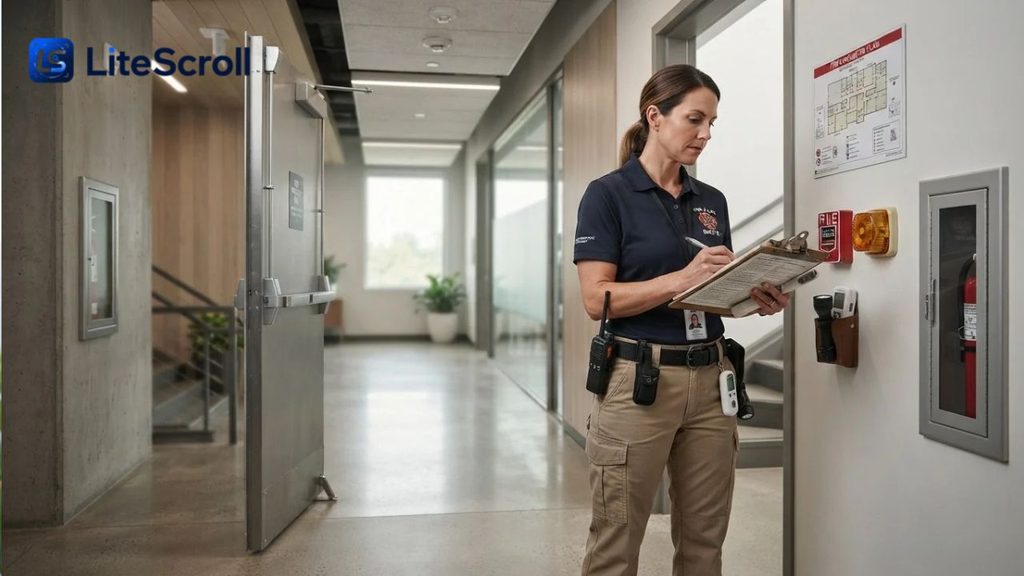
- Walk the exit routes. Inspect circulation, doors, signs, lighting, obstructions, and the continuation of routes beyond the building.
- Review protective systems. Collect relevant testing, maintenance, inspection, and commissioning records for alarms, suppression, and protective construction.
- Check operational arrangements. Examine evacuation plans, emergency roles, access-control behavior, and staff training appropriate to the occupancy.
- Record deficiencies and responsibilities. Prioritize hazards, assign qualified people to corrective work, and agree on follow-up dates.
- Reinspect and preserve evidence. Confirm corrective actions, retain supporting records, and repeat reviews when conditions or use change.
This process helps teams organize an NFPA 101 review but is not a substitute for a design analysis or legally required inspection. The actual scope should be tailored by a qualified life safety professional and the AHJ.
Avoid Common Compliance Mistakes
One mistake is using the latest edition without checking the legally adopted version. Another is assuming all occupancies have the same exit requirements. A third is focusing on installed equipment while overlooking obstructed corridors or changes made by everyday building operations.
A fourth mistake is treating NFPA 101 as a stand-alone replacement for all other applicable standards. Fire alarm design, sprinkler installation, electrical systems, accessibility, and local building rules can introduce additional requirements. A coordinated code analysis is usually more reliable than a collection of unrelated checklists.
Finally, avoid documenting a deficiency without documenting how it was resolved. Owners should be able to explain what was inspected, who performed the correction, and whether any required approval or follow-up was obtained.
Maintain Records and Train the People Who Use the Building
Safety features need periodic attention. Keep accessible records of inspections, testing, repairs, permits, approved plans, and staff training. The frequency and format of required activities depend on the applicable codes and the systems installed, so establish a schedule based on those obligations.
For authoritative source material, the National Fire Protection Association (NFPA) maintains the publication and development information for the Life Safety Code. Its website identifies editions, updates, and access options. Use the actual code text and qualified local interpretation when making compliance decisions, rather than relying solely on a short online summary.
For an NFPA 101 compliance program, a practical record trail is as important as a one-time walkthrough. Train the relevant people to report blocked exits, damaged doors, equipment faults, and changes in room use before those issues become emergencies.
Frequently Asked Questions
Does the newest published edition apply nationwide?
No. NFPA 101 is a model code, and the enforceable version depends on adoption and other governing requirements. The 2027 edition is the current publication as of November 2026, but a state, locality, or federal program may specify an older edition.
Does the code cover older properties?
Yes. NFPA 101 addresses both new and existing buildings, with provisions that vary by occupancy and condition. Which alterations or upgrades are required must be determined from the applicable edition, adopted rules, and the reviewing authority’s decisions.
Are exit signs enough to demonstrate compliance?
No. Signs are one part of a wider exit strategy. Doors, routes, lighting, capacity, and protective features may also be relevant. A proper NFPA 101 review evaluates how occupants can reach safety, not just whether signs are installed.
Who decides which requirements apply to my building?
The authority having jurisdiction interprets and enforces the applicable adopted provisions within its authority. Licensed designers and fire protection professionals can help prepare the analysis and coordinate with the local officials responsible for reviews and approvals.
Do hospitals follow the same edition as offices?
Not necessarily. CMS currently describes requirements based on the 2012 Life Safety Code for specified participating healthcare providers and suppliers. NFPA 101 may therefore be applied through different regulatory frameworks depending on the facility and its location.
How can I read the publication without buying a printed copy?
NFPA offers free online viewing of codes and standards, subject to its access interface and terms. Find the code, select the desired edition, and choose the free-access option. For an enforceable project decision, confirm that the edition you read matches the one adopted by the relevant authority. NFPA
Conclusion
Protecting occupants requires more than a collection of fire safety products. NFPA 101 brings exits, building uses, protective features, and operational practices into a coordinated life safety framework. Confirm the applicable edition, involve qualified specialists, and treat every change of use or building alteration as a reason to review existing protections. A documented, maintained approach supports safer buildings and more defensible compliance decisions.