
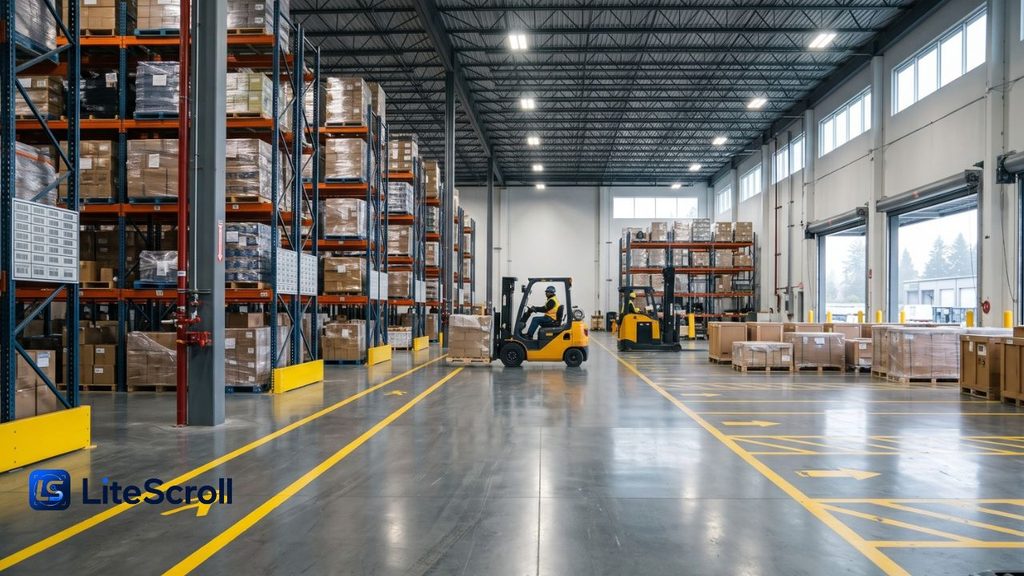
A floor in a working building does much more than create a neat first impression. It carries foot traffic, rolling equipment, spills, cleaning chemicals, and the interruptions of everyday operations. Commercial epoxy flooring can provide a durable, seamless finish when the coating system suits those demands and the concrete beneath it is properly prepared. However, the same finish is not appropriate for every warehouse, kitchen, laboratory, or parking deck.
For businesses in Vancouver and the Lower Mainland, choosing a floor also means planning around damp conditions, work schedules, and facility-specific safety needs. This guide explains how to compare resin systems, identify hidden preparation costs, and organize installation without assuming that one glossy coating solves every problem.
Start With What Your Facility Actually Does
A retail showroom places a premium on appearance and straightforward cleaning. A distribution centre needs resistance to wheeled loads and abrasion. Food processing areas may experience hot washdowns, moisture, and aggressive cleaning. Commercial epoxy flooring works best when the installer evaluates these different conditions before recommending a product.
Make a short list of activities on the floor: pedestrian movement, forklifts, pallet jacks, food preparation, vehicle repair, chemical handling, or laboratory work. Include the frequency of spills and the temperature of liquids reaching the surface. Ask whether equipment is moved while the floor is wet. These details can determine the correct coating thickness, texture, and chemical-resistance specification.
Match the Floor to the Industry
In warehouses, a high-build resin system may reduce concrete dusting and create visible traffic lanes. In clinics or laboratories, a seamless surface and integral coved bases may make cleaning more manageable. In automotive service bays, oils, vehicle movement, and occasional impacts deserve attention. A busy restaurant kitchen may require a system designed for grease, washdowns, and thermal changes rather than a conventional decorative epoxy.
The Vancouver contractor’s industries page distinguishes food and beverage, warehousing, kitchens, healthcare, automotive, manufacturing, cleanrooms, electronics, retail, breweries, and parkades. That is a useful reminder that commercial epoxy flooring describes a category of possible solutions, not one universal specification. Commercial Epoxy Flooring Vancouver
Understand Epoxy and Its Alternatives
Epoxy coatings combine resin and hardener to form a bonded protective surface after curing. Depending on the product, they may be applied as comparatively thin coatings, high-build layers, or more substantial broadcast and trowelled systems. Performance varies considerably between formulations.
When Epoxy May Be a Good Choice
Suitable commercial epoxy flooring can offer abrasion resistance, straightforward cleaning, and a finish that helps control dust from sound concrete. Coloured coatings may make walkways, equipment zones, and work areas easier to distinguish. Chemical resistance must be checked against the specific substances and exposure times in your facility; no epoxy should be described as resistant to every chemical.
When Urethane Cement or Other Resins Fit Better
Hot washdowns and sharp temperature swings can demand alternatives such as polyurethane cement, sometimes called urethane cement. A faster-return-to-service project may benefit from a suitable polyaspartic system. Parking decks exposed to water and movement can require traffic membranes with different properties from ordinary indoor epoxy. Electronics operations may need a tested electrostatic dissipative system and verified grounding.
When comparing commercial epoxy flooring bids, ask the contractor to identify the complete specified system, including primers, intermediate layers, texture, and topcoat. The resin family alone will not tell you whether the design meets your facility’s operating requirements. Sika Canada+1
Surface Preparation Is the Foundation
Coating failures often begin below the visible surface. Oil contamination, weak concrete, old sealers, cracks, and trapped moisture can affect adhesion. A floor that appears clean may still require substantial preparation. Sika’s technical guidance emphasizes sound, appropriately profiled substrates and suitable preparation methods before resin installation. usa.sika.com
For commercial epoxy flooring, contractors should inspect the slab, identify existing coatings, investigate damaged areas, and specify mechanical preparation where required. Grinding or shot blasting may be appropriate depending on the chosen system. Dust control and safe work practices matter, particularly when preparation occurs near occupied rooms or sensitive equipment.
Test Moisture Instead of Guessing
Vancouver’s rainy climate does not by itself establish how much moisture is present in a concrete slab. Ground conditions, drainage, vapour barriers, curing history, and building use all matter. Moisture testing should follow the selected manufacturer’s requirements, including the appropriate method and limits for that product.
Commercial epoxy flooring installed over a slab with unsuitable moisture conditions can blister or lose adhesion. Moisture-mitigation primers are available for certain applications, but each has limits and must be compatible with the overall system. Ask for test results and written guidance rather than a verbal assurance that the concrete looks dry. Sika Canada
Repairs Should Be Included in the Scope
Document cracks, joints, damaged edges, and uneven surfaces before installation. Different defects call for different treatment; a moving joint should not simply be painted over as though it were a cosmetic line. Agree on repair methods and who authorizes additional work if damage is found beneath old flooring.
Pay Attention to Slips and Worker Safety
A smooth, shiny floor can become slippery when wet or contaminated. Commercial epoxy flooring can be designed with broadcast aggregates and other textured finishes to improve traction, but the required surface depends on footwear, contaminants, drainage, and cleaning practices. A texture suitable for dry retail space may be inadequate near a greasy commercial kitchen drain.
The Canadian Centre for Occupational Health and Safety recommends controlling spills, keeping walkways clear, selecting suitable flooring, and maintaining housekeeping procedures. It also notes that floor coatings and abrasive treatments can contribute to slip prevention. A new finish does not remove the responsibility to clean spills promptly and assess hazards. CCOHS
Balance Grip and Cleanability
Very aggressive texture may be harder to clean, while an overly smooth finish may be unsafe in wet conditions. Request sample panels where the balance matters. Consider transitions, slopes, drains, wheel traffic, and the cleaning tools staff will actually use. The installer should explain how the proposed finish will be tested or evaluated for its intended environment.
Plan Installation Around Business Operations
A good floor is of little value if installation unexpectedly interrupts production or access. Set out the rooms to be closed, temporary pathways, equipment relocation, ventilation requirements, and any restrictions on odour or noise. Businesses with continuous operations may need phased installation or a system selected for an appropriate return-to-service schedule.
Commercial epoxy flooring does not have one universal cure time. Temperature, humidity, product chemistry, thickness, and intended traffic affect when the surface can accept pedestrians, equipment, and chemical exposure. Obtain the manufacturer’s actual cure schedule for the conditions on site and do not promise customers a reopening date based on generic advertising.
Coordinate With Other Trades
Floor work may follow plumbing repairs, drain modifications, electrical installation, or equipment relocation. Confirm who will remove shelving, protect machinery, reinstate baseboards, and mark traffic lines. If multiple contractors are involved, document the sequence and the person responsible for final inspection.
What Determines the Project Budget?
The installed price reflects more than the price of resin per square metre. Important factors include floor area, existing coating removal, substrate repairs, moisture treatment, number and thickness of layers, decorative or safety texture, coving, line striping, site access, and the required shutdown window.
When seeking commercial epoxy flooring quotes in Metro Vancouver, ask for an itemized proposal based on a site assessment. A low coating-only figure may omit grinding, crack repairs, moisture testing, or the equipment required to complete work safely. Commercial epoxy flooring estimates should identify those items rather than hide them inside a vague allowance. Compare proposals for the same performance requirements rather than selecting the lowest headline price.
Evaluate Long-Term Value
A durable installation may reduce dusting and make routine cleaning easier, but maintenance and periodic repair can still be necessary. Heavy point loads, dragging metal, chemical spills, and poor cleaning methods may shorten service life. Ask about realistic repair methods, warranty exclusions, and how sections can be restored without closing the entire building.
The total value of commercial epoxy flooring includes downtime, safety, cleaning effort, and expected use—not only material and labour. A less expensive decorative finish may be poor value if a heavy-duty operation needs a more robust system.
Select a Contractor Who Understands the Worksite
Request examples of completed projects in facilities with conditions similar to yours. Ask about substrate evaluation, product data sheets, worker protection, insurance, workmanship coverage, and how the crew will manage an occupied property. A contractor should be able to explain why a particular system is appropriate and where its limits are.
For local project research, the Commercial epoxy flooring page from Epoxy Experts describes applications across warehouses, kitchens, healthcare facilities, laboratories, automotive shops, and other industries in Vancouver and the Lower Mainland. Its categories can help frame questions for a site assessment; they are the company’s own descriptions, not independent certification of every installation or guarantee of a particular result.
Before approving commercial epoxy flooring, confirm the selected products, preparation method, surface texture, edge details, cure schedule, and documentation you will receive at handover. Obtain a written process for change orders and a clear point of contact if operational conditions change.
Keep the Surface Performing After Handover
Sweep or remove abrasive grit regularly, respond promptly to spills, and use cleaners compatible with the resin manufacturer’s instructions. Inspect high-traffic lanes, joints, and transitions for early damage. Heavy equipment operators should follow site rules for safe movement, and staff should report slippery conditions rather than assuming the coating is permanently slip-proof.
Commercial epoxy flooring benefits from a maintenance plan that reflects real site activity. A warehouse may focus on wheels and impact points, while a food-processing area needs attention to cleaning chemicals, drainage, and sanitation procedures. Keep technical records and approved cleaning instructions accessible to supervisors. Review the condition of commercial epoxy flooring after major changes in traffic patterns or cleaning procedures.
Frequently Asked Questions
Is epoxy appropriate for every commercial facility?
No. Commercial epoxy flooring may suit many dry or moderately demanding interiors, but hot washdown areas, moving parking decks, electronics environments, and unusual chemical exposures may require different resin systems. A qualified contractor should assess the facility before selecting a product.
Will a coated floor be slip-proof?
No surface is slip-proof under every condition. Appropriate textures can improve traction, but spill cleanup, footwear, drainage, and maintenance remain essential. Request a finish suited to the actual wet or oily hazards in your building.
Can it be applied over existing concrete?
Often, if the slab is sound and can be correctly prepared. The installer should evaluate contamination, cracks, moisture, existing coatings, and strength. Significant repairs or a moisture-control system may be needed before application.
How long does installation take?
It depends on area, preparation, repairs, resin chemistry, temperature, and service requirements. Ask for a project-specific plan separating installation time from the period needed before staff, forklifts, or cleaning chemicals return to the floor.
Is a glossy finish easier to maintain?
Not automatically. Some smooth finishes wipe easily but can be slippery when contaminated. Highly textured finishes may need more thorough cleaning. Match the finish to the cleaning equipment, actual exposures, and required traction.
What should appear in a contractor’s quote?
The proposal should identify preparation, repairs, moisture testing, product layers, texture, coving, markings, access restrictions, cure requirements, exclusions, and warranty terms. Confirm responsibilities for moving equipment and approving unexpected work.
Conclusion
A successful commercial resin floor begins with understanding the building’s real demands. Commercial epoxy flooring can provide a practical, attractive surface when the system, slab preparation, traction, and installation schedule are specified correctly. Vancouver businesses should compare complete proposals and verify product limitations rather than choosing on appearance or price alone. Good housekeeping and regular inspections help protect the finished investment long after the contractors leave.