
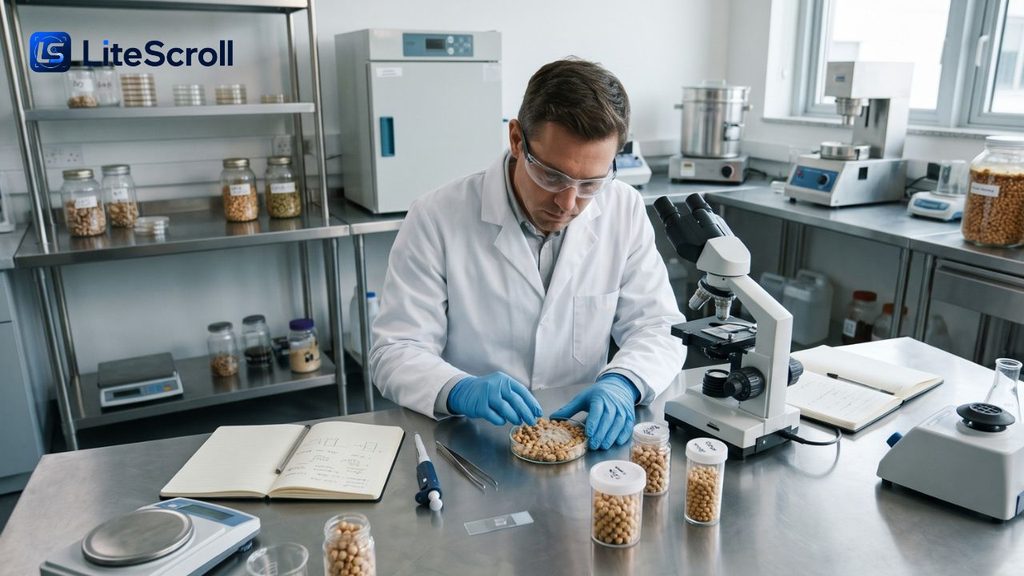
A food can contain iron, zinc, and useful plant compounds without delivering all of them to the body in the same amounts. That difference is the idea behind bioavailability: how much of a substance becomes accessible for absorption and use. For people eating beans, grains, and vegetables regularly, the concept helps explain why preparation and food combinations matter alongside nutrition labels.
A 2023 scientific review examined fermentation in selected vegetables and legumes, including how microorganisms can change phytate levels, mineral availability, and other nutritional characteristics. Its findings are interesting, but not every result comes from human feeding studies. This guide separates practical food advice from laboratory findings and health claims that still need stronger evidence.
What It Means to Get Nutrients From Food
The amount of a nutrient listed in a food database is not necessarily the amount the body absorbs. Food must first be chewed and digested, nutrients must be released from the food matrix, and some must cross the intestinal wall before the body can use them. Nutrient status and the rest of a meal also affect that process.
In everyday nutrition, bioavailability is a useful umbrella term, although researchers sometimes distinguish bioaccessibility, the amount released during digestion, from absorption and subsequent use. An in-vitro digestion experiment can estimate release from a food, but it cannot by itself establish how much a real person absorbs or whether their health improves.
Why a Label Cannot Tell the Whole Story
Imagine two meals containing the same measured amount of iron. One is built mostly around unprocessed grains; the other contains cooked legumes with fresh bell peppers. Their total iron may be similar, yet other ingredients can influence the fraction absorbed. That is why bioavailability must be considered alongside intake, not instead of it.
The most helpful lesson is modest: a varied diet and appropriate preparation usually matter more than trying to maximize a single absorption percentage. Individual nutritional needs can differ substantially, especially with diagnosed deficiencies or digestive disorders.
How Fermentation Changes Plant Ingredients
Fermentation involves microorganisms transforming components of food. In lactic acid fermentation, suitable bacteria produce organic acids as they metabolize carbohydrates. In other fermented foods, yeasts, molds, or different bacteria perform distinct transformations. The process depends on ingredients, microbial strains, temperature, salt, time, and other conditions.
The published review explains how some fermentation processes reduce compounds that bind minerals and may improve bioavailability of iron and zinc. It also describes changes in protein digestibility and various bioactive molecules. Results are not uniform across every vegetable or legume, so a claim about one fermented product should not be copied to another.
The Role of Phytic Acid and Tannins
Seeds store phosphorus partly as phytic acid, which can form mineral-binding phytates. Tannins and other plant compounds may also influence nutrient accessibility. Certain microbes produce enzymes, including phytases, that can break down phytic acid during processing. Reduced phytate under suitable conditions can improve mineral availability in a food or test system.
This is one reason bioavailability sometimes changes after fermenting chickpea flour, soybeans, or other legumes. However, the final effect depends on the process used, and a laboratory measurement of soluble iron is not necessarily equivalent to a measured improvement in human iron status.
Changes Can Involve More Than Minerals
Researchers have reported differences in amino acid profiles, protein breakdown, organic acids, vitamins, and antioxidant measurements after selected fermentations. Some transformations could make nutrients easier to access; others may reduce certain vitamins or fiber. The review specifically describes variable results for vitamin C and emphasizes gaps in research on less-studied vegetables.
Evaluating bioavailability therefore requires looking at the finished food as a whole. A fermentation process that reduces one inhibitor is not automatically superior in every nutrient, and an increase in laboratory antioxidant activity does not prove prevention of disease.
Why Iron and Zinc Deserve Attention
Plant Iron Is Sensitive to Meal Composition
Plant foods largely supply nonheme iron. The NIH Office of Dietary Supplements explains that vitamin C can enhance its absorption, while phytate in grains and legumes can inhibit it. Iron status and other meal components also influence the outcome. These relationships are particularly relevant for people whose diets rely heavily on plant-based staples.
To support iron bioavailability, try pairing cooked lentils with tomatoes, chickpeas with bell peppers, or an iron-fortified cereal with fruit rich in vitamin C. These are food combinations, not treatments for anemia. A clinician should investigate suspected iron deficiency because the cause may require more than a dietary adjustment.
Zinc Intake and Zinc Absorption Are Different
Beans, nuts, and whole grains contain zinc, but phytates can reduce the proportion absorbed. NIH guidance notes that vegetarians and vegans may benefit from preparation methods that reduce phytate binding, such as soaking grains, beans, or seeds before cooking. Sufficient total intake and dietary variety still matter.
Zinc bioavailability cannot be inferred from the number on a nutrition panel alone. Nor does lower absorption mean everyone eating plant foods is deficient. People with highly restrictive diets, persistent symptoms, or diagnosed malabsorption may need individualized advice rather than self-prescribed high-dose supplements.
Practical Ways to Prepare Plant Foods
Soak and Cook Beans Properly
Sorting, rinsing, and soaking dried legumes can make cooking more manageable, and preparation may alter some antinutrient levels. Effects vary according to food type and conditions. Thorough cooking remains essential, especially for red kidney beans, which can cause illness if inadequately cooked. Never interpret soaking as a substitute for proper cooking.
For bioavailability, soaking is one possible tool rather than a magic step that removes every inhibitor. Follow tested cooking guidance and enjoy legumes as part of a balanced diet even when there is no time for an elaborate preparation routine.
Consider Traditional Fermented Foods
Foods such as tempeh, natto, fermented vegetables, and some traditionally prepared grain products illustrate different microbial processes. Their nutrient profiles and practical uses are not interchangeable. Some contain living microorganisms when served; others are cooked or otherwise processed before eating. “Fermented” does not automatically mean “probiotic.”
Fermented legumes may offer useful changes in bioavailability under particular production methods. A store-bought product may differ from the preparation examined in a study, so avoid promising a specific mineral-absorption gain based only on its name. Choose products that fit your preferences, nutrition needs, and food-safety requirements.
Combine Nutrients Instead of Eliminating Food Groups
A simple plate of beans, grains, cooked vegetables, and a vitamin C-rich ingredient can be nutritious and practical. Whole grains also supply fiber and other nutrients, so replacing them all with refined grains merely to avoid phytate can create unnecessary tradeoffs. There is no reliable reason for healthy adults to fear every plant food containing these compounds.
Healthy bioavailability strategies focus on meal variety, reasonable preparation, and adequate intake. They do not require expensive powders, restrictive detox plans, or precise claims about how many minutes every ingredient must soak.
Food Safety Matters More Than a Nutritional Claim
Home fermentation must follow tested food-preservation instructions. The University of Minnesota Extension recommends suitable ingredients, controlled salt and temperature, keeping produce submerged, and monitoring acidity using validated methods. An improvised low-salt or poorly controlled process can create food-safety risks, even if the intended goal is better nutrition.
Aiming for higher bioavailability is never a reason to eat a questionable ferment. Do not rely on smell or appearance alone as a safety test. Use trusted recipes for the exact product, refrigerate when instructed, and discard food when safe preparation cannot be confirmed.
Consider Sodium and Individual Health Needs
Many fermented vegetables contain added salt. Someone limiting sodium because of high blood pressure or another condition may need to choose portions and products carefully. The paper reviewed possible beneficial compounds, but did not establish fermented vegetables as treatments for hypertension or other diseases.
The right balance between convenience, bioavailability, salt intake, and overall nutrition is personal. If you have kidney disease, anemia, a complicated diet, or are planning food for a vulnerable family member, get qualified guidance rather than adapting a recipe based solely on a laboratory result.
Read the Research Without Overstating It
The 2023 review by Eliza Knez and colleagues, published in Life, is titled Effect of Fermentation on the Nutritional Quality of the Selected Vegetables and Legumes and Their Health Effects. It reviews research on selected foods, including legumes, cabbage, and cucumbers, and identifies gaps for other vegetables. It is a review of prior findings, not one new clinical trial involving every fermented food.
For a fuller scientific explanation, read the article on bioavailability, which discusses fermentation, mineral-binding compounds, and changes in nutrient accessibility. Its authors also note that the fate of some newly produced bioactive substances after eating fermented vegetables remains uncertain. Their review is valuable for understanding mechanisms, not as a guarantee of health outcomes.
Laboratory Findings Versus Human Outcomes
A test-tube assay may show increased iron solubility, while an animal experiment may indicate a metabolic effect. Neither result automatically establishes improvement in human blood tests or disease risk. Stronger conclusions require suitable human studies with clearly described foods, doses, comparison groups, and outcomes.
When you see a product advertise enhanced bioavailability, ask which nutrient was measured, what method was used, and whether the research tested the exact food being sold. Measurements of content, digestion, absorption, and long-term health each answer different questions.
Four Questions for Any Nutrition Claim
Ask whether the evidence comes from people or a laboratory; whether the tested food matches the advertised food; whether absorption was actually measured; and whether a claimed health benefit was demonstrated separately. These questions are especially important when a supplement or unusual fermented product promises dramatic effects.
A Realistic Food-First Approach
For most adults, regular meals that include legumes, vegetables, fruits, whole grains, and appropriate protein sources provide a sensible foundation. Add citrus or peppers to plant-iron meals, cook beans thoroughly, and enjoy fermented foods you like when safely prepared. These steps are accessible without turning every meal into an experiment.
Understanding bioavailability can make food choices more thoughtful, but it should not create anxiety about ordinary meals. People with confirmed iron or zinc deficiencies need professional assessment and, when indicated, targeted treatment. Food preparation is supportive; it is not a replacement for clinical care.
Frequently Asked Questions
Is a food with more nutrients always more nutritious?
Not automatically. Total nutrient content is important, but digestion and absorption also matter. Two meals may contain similar amounts of iron yet provide different absorbed amounts because of vitamin C, phytate, and other dietary factors.
Does fermenting vegetables guarantee better mineral absorption?
No. The effect depends on the food, microorganisms, conditions, and the nutrient measured. Studies sometimes find improved bioavailability in laboratory models, but human absorption and long-term health outcomes need separate evidence.
Can vitamin C improve iron uptake from plant meals?
Yes. Vitamin C can increase absorption of nonheme iron. Pairing beans or lentils with tomatoes, peppers, or citrus is a practical strategy, although it does not replace medical evaluation or treatment of iron deficiency.
Are phytates harmful enough to avoid beans and grains?
Generally no. Phytates can limit absorption of certain minerals in some meals, but beans and whole grains provide valuable fiber and nutrients. A varied diet and appropriate preparation are usually more sensible than eliminating entire food groups.
Are all fermented foods probiotic?
No. Some contain live microorganisms, but others are heated, filtered, or processed so live cultures may not remain. Even products with live cultures do not automatically have demonstrated probiotic benefits for a particular health condition.
Is home fermentation safe for beginners?
It can be when you follow research-tested recipes and food-safety controls. Correct salt, temperature, submersion, acidity, and storage are important. Avoid improvising procedures to chase a nutrition claim, and use established preservation guidance.
Conclusion
The nutrient value of a meal depends on more than the amount printed on a label. Bioavailability helps explain why food composition, fermentation, cooking, and meal combinations influence the nutrients we may absorb. Research on fermented vegetables and legumes is promising in specific contexts, but results differ across foods and many proposed health effects remain uncertain. Choose varied foods, prepare them safely, and seek professional advice when a deficiency or medical condition needs attention.