
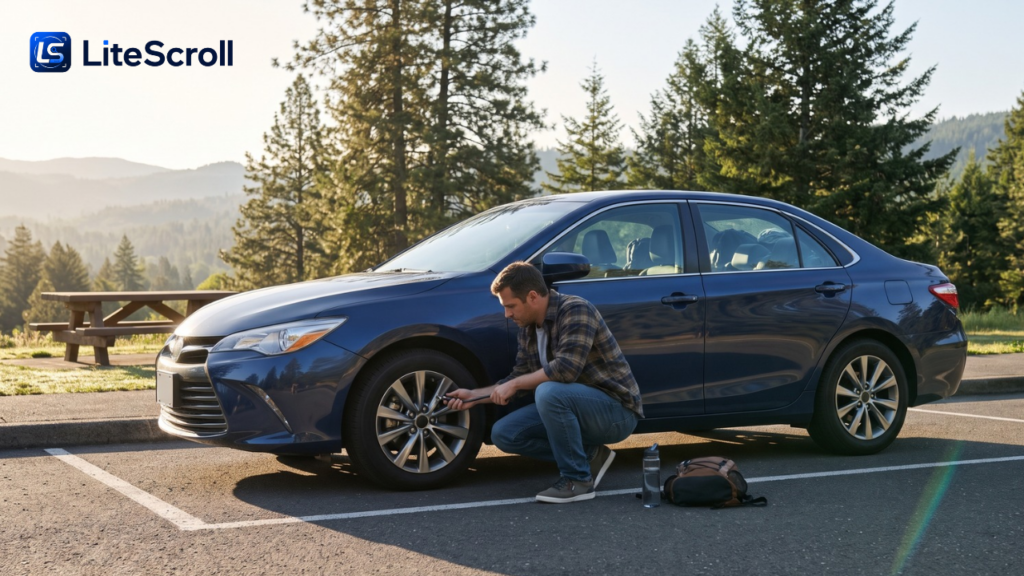
New tires can transform how a sedan feels on the road, but the most expensive option is not automatically the safest or most appropriate. Drivers comparing passenger car tires should first consider the vehicle’s approved specifications, local weather, usual journeys, and realistic maintenance needs. A quiet highway tire may be excellent for commuting yet unsuitable for prolonged severe winter conditions. Likewise, a sporty tread does not compensate for the wrong load rating or neglected inflation pressure.
This guide explains how to recognize major tire categories, evaluate Giti’s passenger-car lineup, check fitment, and compare ownership costs. It focuses on U.S. driving, while recognizing that Giti’s global product catalog and regional inventories are not identical.
Start With the Vehicle, Not a Promotional Offer
Before browsing passenger car tires, inspect the Tire and Loading Information label, normally found on the driver’s door jamb, and read the owner’s manual. The automaker identifies the specified tire size, recommended cold inflation pressure, and important loading details. These requirements are the starting point for any replacement, even when an online store suggests other options.
Read Sidewall Numbers as a Complete Specification
Consider the illustrative marking 225/55R17 97V. The first number describes nominal section width in millimeters. The second expresses sidewall height as a percentage of width. The letter R indicates radial construction, and 17 identifies wheel diameter in inches. The remaining load index and speed symbol must be checked against the vehicle’s requirements. This is an example, not a recommended fitment for a particular model.
Do Not Change Dimensions Without Qualified Advice
Two passenger car tires may fit the same wheel diameter yet differ in load capacity, outside diameter, or clearance. Improper substitutions can affect driving dynamics and electronic systems. If you are considering a different size, have a qualified tire professional confirm compatibility rather than relying on appearance alone.
Understand the Major Tire Categories
The best category depends on the conditions a driver actually faces. All-season, touring, summer performance, and winter designs use different compounds and tread patterns. When comparing passenger car tires, look for independent tests of the exact model and size instead of assuming a broad category guarantees a particular braking distance.
Touring and All-Season Options
Touring tires are often designed around ride comfort, balanced traction, noise, and wear. All-season tires typically aim to manage a range of everyday temperatures and light seasonal conditions. These descriptions overlap: a tire may be both touring and all-season. However, an all-season label alone does not establish severe-snow capability or replace a dedicated winter tire where conditions demand one. Tire Rack+1
Summer Performance Designs
Performance-focused passenger car tires may prioritize steering precision and warm-weather grip. Some summer compounds are not suitable for freezing conditions, even when the road looks dry. Choose this category only if your climate, driving habits, and seasonal tire plan support it. A high speed rating is not permission to exceed road limits.
Dedicated Winter Equipment
In regions with regular snow and ice, purpose-built winter tires can provide meaningful advantages over ordinary all-season designs. Look at the applicable winter performance markings and recommended operating conditions. Installing the appropriate set on all wheel positions is generally preferable to mixing fundamentally different seasonal categories; consult the vehicle manufacturer and installer for specific requirements.
Explore the Manufacturer’s Passenger Lineup
Giti’s global catalog organizes its products by vehicle type and use. Drivers researching passenger car tires can browse series such as GitiComfort, GitiSport, GitiSynergy, and GitiControl, then review model-specific information. The catalog includes original-equipment, performance, EV-compatible, and other filters, but not every listed model or size is necessarily sold in every country. Giti Tire
Comfort-Oriented Models
The company presents GitiComfort T20 as a value-oriented model with an emphasis on durability, and GitiComfort F22 among its comfort-focused passenger offerings. Those are the manufacturer’s descriptions rather than independent guarantees of mileage or noise reduction. For passenger car tires used on daily commutes, compare the available sizes, load ratings, and credible third-party assessments before making a shortlist. Giti Tire+1
Efficiency and Balanced Road Use
GitiSynergy H2 is marketed around comfort, rolling resistance, and wet-road behavior. The company notes that certain performance labels apply only to selected sizes, an important reminder that the same pattern can have different published characteristics across sizes. A buyer comparing passenger car tires should examine the precise fitment instead of assuming every version receives the same grade. Giti Tire
Sportier and Electric-Vehicle Options
The catalog lists GitiSport S2 and S2+ alongside GitiControl P10 and several EV-compatible models. A performance or EV icon is a useful search filter, not proof that a tire satisfies every manufacturer’s requirements. Always check the vehicle’s complete specification and locally available product documentation. Giti Tire
Match the Tire to Your Climate and Roads
A commuter in a warm, rainy coastal city faces different conditions from a driver living near snowy mountain roads. Selecting passenger car tires should involve the lowest temperatures you regularly encounter, the frequency of heavy rain, road surfaces, and the amount of highway driving. Buying solely for rare high-speed performance may sacrifice qualities you value every day.
Wet Grip Matters Even at Ordinary Speeds
Standing water can reduce traction and increase hydroplaning risk. Tread grooves assist water evacuation, but their effectiveness changes with tire design, tread depth, pressure, and speed. Seek comparable independent wet-braking tests where available, and reduce speed in heavy rain. No tread pattern can make poor visibility or deep water safe.
Look Beyond a Quiet Test Drive
Noise and comfort can change with pavement type, cabin insulation, tire pressure, and wear. If you spend hours commuting, ask about ride characteristics and compare reviews that identify the exact vehicle and size. Reports about other passenger car tires in the same product family may not predict your experience.
Consider Special Requirements for Electric Cars
Battery-electric vehicles may impose particular demands related to weight, instant torque, road noise, and energy efficiency. Still, compatibility is determined by the automaker’s requirements, not simply an EV-ready marketing label. Some passenger car tires advertised for electric vehicles are also used on conventional cars; the exact size and service description are what matter.
Balance Rolling Resistance With Control
Lower rolling resistance can support efficiency, but wet traction and correct load capacity remain essential. Ask whether an EV fitment has a manufacturer-approved rating, and compare available test evidence rather than expecting a fixed range increase. Owners should also consider tire noise because an electric powertrain can make road noise more noticeable.
Calculate the Real Installed Cost
Retail prices vary by size, model, availability, and geography. The complete quote may include mounting, balancing, valve replacement, tire-pressure monitoring service, disposal charges, taxes, and alignment work if needed. Comparing passenger car tires only by the advertised cost of one tire can hide significant differences in the total bill.
Evaluate Warranty Terms Carefully
A manufacturing-defect warranty is not the same as a mileage or road-hazard promise. Review whether registration, rotation records, proof of purchase, or authorized installation is required. Regional warranty programs may differ from global marketing descriptions. Ask the seller for the written terms applicable to the exact model and your location.
Think in Terms of Useful Service Life
A less expensive set is not necessarily better value if it performs poorly for your climate or needs replacement unexpectedly. Conversely, premium pricing does not guarantee a longer lifespan. A responsible passenger car tires comparison considers fitment, tested performance, predictable maintenance, and long-term cost without treating an estimated treadwear figure as a guaranteed result.
Inspect Inflation, Tread, and Tire Condition
Correct pressure supports handling, tire life, and vehicle efficiency. NHTSA recommends checking inflation at least monthly when tires are cold and following the vehicle placard rather than the maximum pressure molded onto the sidewall. A tire-pressure monitoring system is a warning aid, not a substitute for a routine gauge check. NHTSA
Know When Worn Tread Becomes Unsafe
NHTSA says tires should be replaced once tread is worn to 2/32 inch. Wet-weather performance may deteriorate before that legal or practical minimum, so investigate wear early. If passenger car tires show exposed cords, bulges, severe cuts, or repeated pressure loss, seek professional assessment promptly rather than continuing to drive on them. NHTSA
Watch for Uneven Wear and Damage
Feathering, shoulder wear, or vibration may indicate alignment, inflation, balance, or suspension problems. A new set will not correct the underlying cause. Rotate tires according to the owner’s manual where the wheel and drivetrain configuration permits. Staggered fitments may require a different plan.
Check Identification Codes and Recalls
The DOT tire identification number identifies manufacturing information, including a date code. Tire age is one factor in safety, alongside condition, storage, heat exposure, and manufacturer recommendations. Check recall information for the specific product rather than assuming that a brand-wide search is enough. NHTSA
Use a Dealer to Confirm Your Shortlist
Bring the vehicle’s recommended size and a description of your daily driving to a reputable installer. Ask the dealer to explain why a suggested product meets the load and speed requirements, what seasonal limitations apply, and which warranty is offered. For passenger car tires listed in a global catalog, confirm that the exact size is stocked and supported in the U.S. market. Giti maintains separate regional brand directories, including U.S. resources, so availability should not be inferred from the international website. Giti Tire
Compare a Few Well-Matched Options
Instead of collecting dozens of loosely related recommendations, shortlist two or three products that genuinely fit the car and conditions. Ask for an itemized installed price, recent production details, and the expected ordering timeline. A clear explanation from the installer is more useful than an unsupported claim that one model is universally best.
Use a Practical Buying Checklist
Before paying for passenger car tires, document the factors that will affect both safety and ownership costs. Keep the eventual purchase receipt and service records so future maintenance or warranty questions are easier to resolve.
- Confirm the vehicle-approved size, load index, and speed rating.
- Select the appropriate seasonal category for local weather.
- Review relevant wet traction, comfort, and durability evidence.
- Ask for the total installed cost and current written warranty.
- Check the tire identification information and applicable recalls.
- Confirm mounting, balancing, inflation, and follow-up service.
Frequently Asked Questions
Which category suits normal commuting?
Touring or suitable all-season designs often meet the needs of everyday drivers, depending on climate and the vehicle. Compare passenger car tires within the correct size and seasonal category rather than choosing solely on price or a promotional label.
Can I buy a different size from the original equipment?
A compatible alternate size may be possible, but approval depends on wheel dimensions, clearances, load requirements, and the vehicle maker’s guidance. Have a qualified professional verify any proposed change before installation.
Are all-season models enough for mountain winters?
Not necessarily. Severe snow and ice may call for suitable winter tires or specific traction markings. A tire advertised for all-season use should not be assumed to match dedicated winter performance in demanding conditions.
Do electric vehicles require unique replacement tires?
Not every EV requires an exclusively EV-branded product. The correct choice must satisfy load, dimension, and performance requirements. Compare suitable passenger car tires using the automaker’s guidance and a professional fitment check.
How often should I check pressure?
Check cold inflation pressure at least monthly and before longer journeys. Use the vehicle placard’s recommendation and inspect for visible damage or uneven wear at the same time.
Does a more expensive model always last longer?
No. Service life depends on construction, road conditions, driving style, alignment, inflation, and maintenance. Reviews and warranties can provide context, but no single price or treadwear claim guarantees an individual outcome.
Conclusion
Choosing the right tires is an exercise in matching the vehicle, weather, and everyday driving priorities rather than following a single brand ranking. The strongest passenger car tires shortlist begins with verified size and load requirements, then compares suitable seasonal categories and model-specific evidence. Confirm local availability and the complete installed cost before buying. After installation, regular pressure and tread checks remain essential to safe driving.