
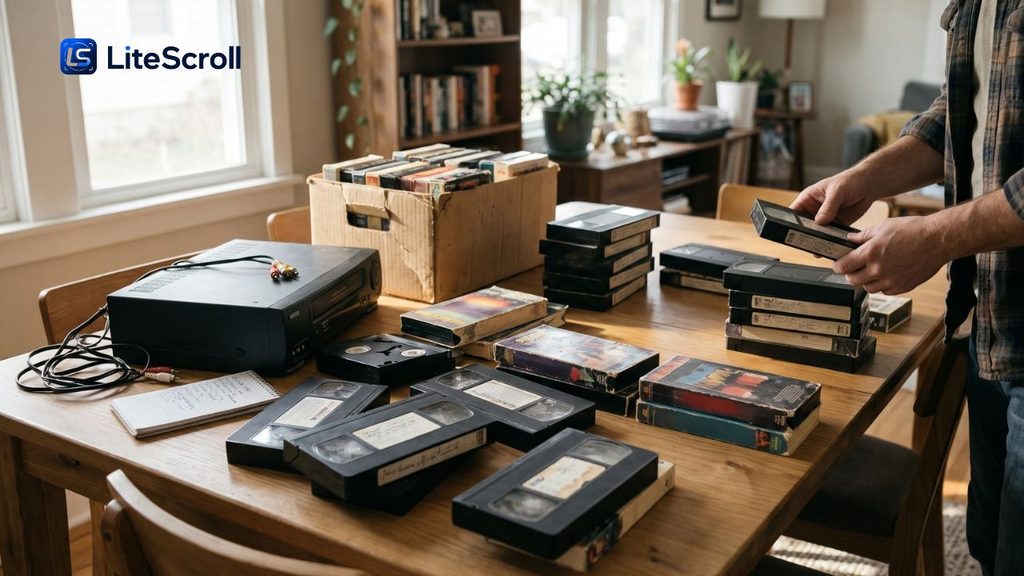
A box of videocassettes can hold clutter and irreplaceable family history. Before clearing a closet, recycling old tapes deserves more thought than dropping plastic cases into a household recycling cart. VHS and audio cassettes combine rigid shells, small metal components, and long lengths of magnetic recording tape. Those materials create problems for ordinary recycling equipment, even when the outside looks like recyclable plastic.
For recycling old tapes responsibly, identify the contents, preserve anything important, and choose a service that genuinely accepts the format. This guide covers curbside limits, specialist programs, and safe preparation.
Why Videocassettes Are Hard to Process
A typical VHS cassette contains two reels holding flexible magnetic tape inside a protective plastic shell. Screws, labels, and other components hold the assembly together. Audio cassettes use a related design on a smaller scale. The shell and recording medium cannot simply be processed as one ordinary plastic container.
For anyone considering recycling old tapes, the most important mechanical problem is tangling. Loose magnetic tape can wrap around sorting equipment and cause stoppages. Cuyahoga County’s Solid Waste District in Ohio explicitly tells residents to keep VHS tapes out of curbside recycling for that reason. Waste company Rumpke gives similar guidance about cassette film interfering with conveyors. The problem is operational, regardless of recycling symbols. CuyahogaRecycles+1
Plastic Does Not Automatically Mean Curbside Recyclable
Some shell plastics are recoverable, but the complete cassette is a mixed-material product. A curbside provider may not accept its size, shape, separated parts, or plastic grade. Removing screws yourself does not guarantee that the shell becomes suitable for the blue bin.
The first rule for recycling old tapes is therefore to follow an actual facility’s accepted-materials list. If no local rule specifically includes magnetic media, do not assume that accepting bottles or electronics also means accepting videotapes. A recycling wish can unintentionally contaminate a sorting stream.
Protect Recordings Before Anything Leaves Your Home
Commercial films can sometimes be replaced, but a child’s birthday or an old wedding recording may exist only on one cassette. Labels are not always accurate, especially when tapes were reused. Sort items into clearly marked groups: personal recordings, commercially released movies, blank or unknown tapes, and visibly damaged media.
When recycling old tapes, give family footage priority over speed. Make a simple inventory and consult relatives who might recognize names or dates. Avoid putting unknown cassettes into a donation box until you know whether they contain private moments. If possible, preserve a digital copy before deciding what to do with the physical original.
Digitize What You Cannot Replace
A working VCR, suitable video capture device, and computer can be used to convert many VHS recordings. Home conversion typically involves playing the cassette in real time while recording its signal. Professional transfer services offer another option when equipment is unavailable, the collection is large, or footage needs more careful handling.
Digitization should be completed and checked before recycling old tapes that contain important memories. Open the transferred files, confirm the sound and picture, and inspect sections from the beginning, middle, and end. Keep two copies in separate locations, such as an external drive and cloud account. Capture
Be Careful With Damaged or Moldy Media
A tape with visible mold, broken casing, or a jammed reel can damage playback equipment. Do not force it into an aging VCR merely to identify the recording. Ask a service experienced with damaged magnetic media whether inspection or recovery is practical. Handling contaminated tapes may also require appropriate precautions.
Where Can You Take Unwanted Tapes?
Options for recycling old tapes differ between U.S. counties. Some public facilities accept magnetic media, while others exclude it from electronics programs. Always verify the exact format, collection hours, resident eligibility, packaging instructions, and charges before traveling or shipping anything.
City and County Drop-Off Programs
Start with the waste authority’s official website. Search its accepted-materials database for VHS, cassette tapes, magnetic media, or obsolete media. Cuyahoga County, Ohio, lists a year-round magnetic-media drop-off program that accepts multiple cassette formats. Fairfax County, Virginia, separately lists VHS and magnetic recording tapes at its designated e-cycling stations, with restrictions on accompanying packaging and who can use the service. CuyahogaRecycles+1
These examples show that recycling old tapes is possible in some communities, not that the same service exists nationwide. Call the site if the wording is unclear. A center accepting old VCR players might refuse the actual cassettes, and a one-day collection event may follow different rules from a permanent facility.
Specialist Mail-In Programs
Some companies accept obsolete recording media through paid mail-in services. Capture’s August 2026 guide identifies GreenDisk and TerraCycle’s relevant media recycling program as options, although availability, pricing, and accepted formats can change. Check the provider’s current instructions rather than relying on an old article or an unverified local listing. Capture
Before paying for recycling old tapes by mail, ask what happens after the shipment arrives. Clarify whether the program dismantles items for material recovery, uses other approved processing methods, or sends residual material to disposal. The term recycling is not a guarantee that every component becomes a new consumer product.
Hard-to-Recycle Collection Centers
Some community organizations run specialized collection locations. Eco-Cycle’s CHaRM facility in Colorado lists VHS tapes and other media among its accepted items, with facility and item fees, while excluding the removable cases around those media. That packaging detail differs from Cuyahoga County’s guidance, which permits tapes to arrive in their cases or sleeves. Eco-Cycle+1
This difference is why recycling old tapes requires checking local instructions instead of following a universal packing recipe. The receiving organization is the best source for what goes into its collection stream, how items should be prepared, and whether fees apply.
Reuse or Donate Before Choosing Disposal
Functional commercial releases may have value to collectors, community groups, or artists who explicitly want physical media. Check whether a thrift store still accepts VHS before bringing boxes to its donation area. Do not pass along deteriorating, moldy, or unplayable tapes as though they were useful donations.
Reuse can be an appealing alternative to recycling old tapes because it extends the life of a working item without requiring material processing. However, ordinary mass-market films are not automatically rare collectibles. Check actual sold listings for the same edition and condition instead of believing sensational claims about VHS prices.
Be Thoughtful About Creative Repurposing
Empty shells may be used in craft projects when they are clean and safe to handle. Avoid pulling out lengths of magnetic tape that could become tangled waste, and do not create sharp exposed edges through careless dismantling. Do not repurpose a personal recording into an object that someone else could easily access or play.
Prepare a Collection for Safe Handover
After the keep, donate, and recycle groups are separated, inspect each cassette’s outside condition. Keep units dry, place them in a sturdy container, and avoid excessive weight that can crack shells. Follow the chosen program’s rules for boxes, paper sleeves, plastic cases, and shipping labels. Do not dismantle tapes unless that specific program instructs you to do so.
People planning recycling old tapes should also think about privacy. Recordings may reveal names, addresses, children, or private conversations. Digitizing footage protects your copy but does not erase the original. For sensitive media, ask a qualified service about secure destruction and documentation instead of assuming ordinary donation is private.
A Practical Seven-Step Home Sorting Process
- Gather cassettes from closets, garages, and storage boxes without exposing them to moisture.
- Check labels and group personal footage separately from commercial releases.
- Identify unknown recordings only with equipment that is safe for their condition.
- Digitize irreplaceable material and test more than one part of each file.
- Make backups and confirm the people involved are comfortable with the disposal decision.
- Verify a local reuse outlet or specialist recycler and follow its packing rules.
- Record what was transferred or discarded so relatives can find the digital archive later.
This simple workflow makes recycling old tapes less likely to end with accidentally lost memories, an unsuccessful drop-off, or damaged recycling equipment.
What About Best Buy, Staples, and General E-Waste Events?
Retail electronics recycling programs often accept equipment rather than the media used inside it. Capture’s 2026 guidance says Best Buy does not accept VHS cassettes themselves, even though some playback equipment may qualify. It also reports that VHS tapes are not part of Staples’ standard in-store recycling list. Retail rules may change, so confirm directly before visiting. Capture
When researching recycling old tapes, do not treat an online listing for electronics recycling as sufficient proof. Ask whether the site specifically accepts magnetic media, audio cassettes, VHS-C, or MiniDV. Different formats sometimes have different handling requirements, and an events flyer may not provide enough detail.
When No Recycling Service Is Available
Recycling old tapes is not always possible through a convenient collection or mail-in service. First consider legitimate reuse for playable commercial media. If no suitable option remains, check municipal waste instructions for ordinary disposal. Cuyahoga County advises regular trash for tapes that residents do not bring to its special recycling drop-off. CuyahogaRecycles
This is a more responsible answer than pretending recycling old tapes is possible through every municipal cart. Do not put loose magnetic film into curbside recycling, burn tapes, or leave unwanted boxes beside a charity collection bin. Disposal rules differ locally.
Think About the Complete Environmental Tradeoff
Sending a few tapes across the country may involve packaging and transport costs. A local collection trip may also be inefficient if it requires a long separate journey. Consider combining media drop-off with an existing errand or consolidating a collection before using a paid service. Choose reputable programs that clearly explain how they handle collected materials.
Read the Source Guide With Local Rules in Mind
Capture’s discussion of recycling old tapes, published August 17, 2026, outlines why curbside bins are usually unsuitable and describes specialist options, donation, privacy, and preservation. It also highlights the difference between recycling a VCR and recycling the VHS cassette used in it. The article is a helpful starting point, but the local collection authority’s current instructions should decide where you actually take the tapes. Capture
Frequently Asked Questions
Can old VHS tapes go into my recycling bin?
Usually not. Flexible magnetic tape can tangle sorting equipment, and intact cassettes combine materials ordinary curbside facilities do not process together. Check your municipality’s specific rules rather than relying on the plastic appearance of the shell.
Is there a free way to dispose of videocassettes?
Some local waste districts and occasional collection events accept magnetic media at no direct charge, while other sites charge fees or restrict participation to residents. Verify opening hours, eligibility, and the exact formats accepted before you travel.
Should I remove the magnetic tape from its case?
Not unless the receiving recycler specifically requests that preparation. Dismantling can create tangled waste and sharp parts, and the resulting shell may still be excluded from curbside recycling. Keeping the cassette intact is often easier for specialist handling.
Can I donate homemade family recordings?
It is generally wiser to keep or securely destroy private recordings after making and verifying digital backups. A secondhand shop cannot guarantee confidentiality. Donate only materials that are appropriate to share and that the recipient actually accepts.
What is the difference between digitizing and recycling?
Digitizing transfers the recorded content into a computer file; recycling processes the physical cassette materials. They solve different problems. For important home videos, preservation should usually come first because destruction of the original can make the memories unrecoverable.
Are audio cassettes and VHS-C handled the same way?
They present related magnetic-media challenges, but acceptance depends on the program. Some specialist collectors take VHS, VHS-C, audiocassettes, and other formats together. Never assume a facility accepts every tape type without checking its posted list.
Conclusion
Old tapes deserve a careful final decision because their plastic shells and magnetic film rarely belong in ordinary curbside recycling. The smartest approach to recycling old tapes is to protect personal recordings first, then check a specific local or specialist program. Reuse playable commercial media where practical, respect privacy, and follow the receiving facility’s exact instructions. That way, clearing shelf space does not mean sacrificing important memories or contaminating a recycling stream.