
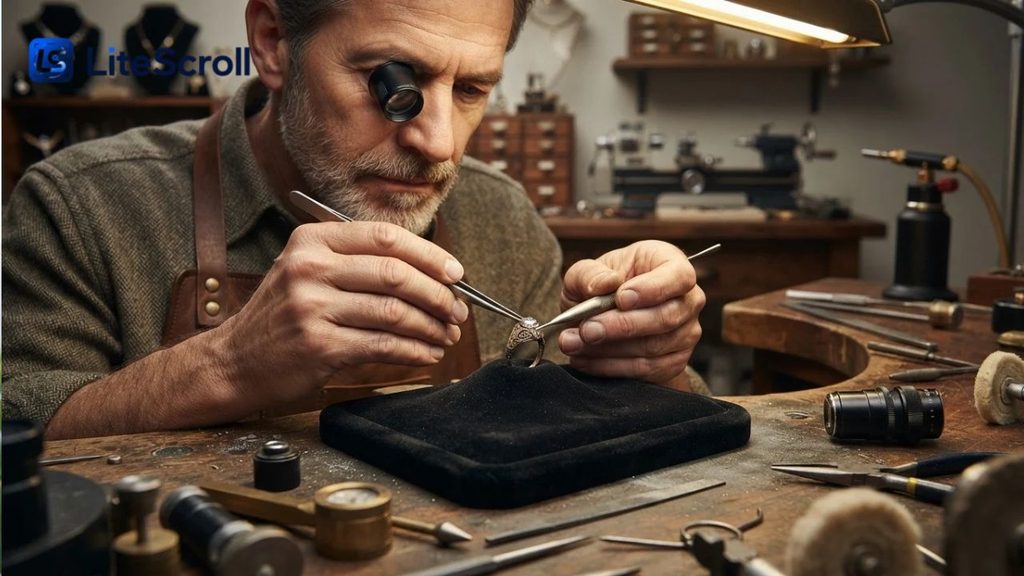
A ring with a loose stone or an inherited necklace with a broken clasp does not necessarily belong at the back of a drawer. Thoughtful jewelry restoration can make a meaningful piece wearable again while respecting the details that make it special. The aim is not always to make old jewelry look brand new. Sometimes preserving its original surface, craftsmanship, and family history matters more than achieving a mirror-like finish.
Understanding the difference between a simple repair and a substantial rebuild helps you ask better questions. This guide explains common services, gemstone risks, costs, and the decisions to make before authorizing work. With the right inspection, jewelry restoration can balance structural safety with the character you want to keep.
Restoration, Repair, and Redesign Are Not the Same
A repair usually addresses a defined problem: tightening a stone, fixing a clasp, or reconnecting a chain. Restoration can involve several steps to recover strength, usability, and an appropriate appearance. Redesign changes how a piece looks or functions, perhaps by placing an inherited diamond into a new ring.
For jewelry restoration, decide which result you actually want before discussing techniques. An antique ring may need a stronger shank without losing its engraved shoulders. Conversely, a badly damaged setting may not safely support daily wear even after a cosmetic polish. A clear goal helps the jeweler explain what can be conserved and what must change.
Preserve Character Before Removing Material
Old jewelry may show hand engraving, a soft patina, or tiny marks left by earlier workmanship. Aggressive refinishing can erase those details permanently. Ask a specialist to distinguish ordinary dirt from an intentional finish and to describe what each proposed polishing step would remove.
Good jewelry restoration begins with documentation, especially for sentimental or collectible pieces. Take well-lit photographs before work starts and identify the details that must remain untouched. If historical value is uncertain, consider seeking an independent evaluation before allowing irreversible alterations.
Know the Signs That Professional Work Is Needed
Jewelry experiences wear through friction, small impacts, repeated opening and closing, and contact with everyday substances. Warning signs include a stone that moves, prongs that snag clothing, a ring band worn thin underneath, a failing spring clasp, or chain links that have stretched. Stop wearing an item if a gemstone or structural component seems insecure.
Seeking jewelry restoration early may prevent a small defect from becoming a more complicated problem. A worn prong, for example, may be rebuildable before the stone is lost. Do not shake a ring to test whether its gemstone rattles; set it aside and let a professional examine the mounting under magnification.
Rings: Prongs, Shanks, and Settings
Prong retipping adds suitable metal to worn tips, while a more damaged setting may need rebuilding or replacement. A thin ring band may require shank reinforcement or reshanking, and resizing can affect adjacent details. The jeweler should evaluate stone security before using heat, pressure, or polishing tools.
For jewelry restoration involving an engagement ring, ask whether the existing stone can remain mounted safely during the work. The answer depends on its type, treatments, and mounting. A skilled bench jeweler should explain the alternatives rather than promising that every ring can be treated the same way.
Chains, Bracelets, and Closures
Necklace and bracelet repairs can involve replacing a clasp, reconnecting a broken link, reinforcing worn jump rings, or addressing a weak hinge. Very fine chains require careful handling because adding too much metal may create an obvious stiff section. Matching the original color and link pattern can matter as much as making the connection strong.
Jewelry restoration for bracelets also means checking neighboring links, not only the visible break. Fixing one worn connection while leaving several others close to failure may provide short-lived relief. Ask for the condition of the entire fastening system to be checked.
Pearls, Beads, and Fragile Components
Strands of pearls and beads may need restringing when threads stretch, fray, or weaken. The jeweler should discuss suitable stringing materials, knots, and clasp connections while keeping the intended length and appearance in mind. Fragile beads may require more conservative handling than metal components.
A jewelry restoration plan for older mixed-material pieces needs particular care. Adhesives, enamel, organic gems, and old repairs can react poorly to heat or standard workshop cleaning. Never assume a bright, freshly polished finish is automatically the safest outcome.
Match the Method to the Gemstone
Diamonds are exceptionally resistant to scratching, but they can chip under impact, and their settings can fail. Emeralds may contain oil or resin fillers, while pearls and opals have their own sensitivities. Treatments and previous repairs can change which cleaning, heating, and setting techniques are appropriate.
Before jewelry restoration begins, disclose everything known about the gemstones, including certificates, past repairs, and possible treatments. The Gemological Institute of America advises extra caution with ultrasonic and steam cleaning because some stones, fillers, and settings can be damaged. A jeweler may choose gentler methods or remove a stone before certain procedures. gia+1
Why Ultrasonic Cleaning Is Not a Universal Shortcut
Ultrasonic machines use vibration to loosen contaminants, but vibration may also aggravate weak mountings or certain treated gems. Steam introduces heat and pressure that can be unsuitable for vulnerable materials. Professional assessment should determine whether either method belongs in the process; being diamond-set does not make an entire piece risk-free.
Find a Jeweler Who Explains the Work Clearly
A trustworthy evaluation should identify the problem, describe the proposed method, and clarify what might change visually. Ask whether repairs occur on-site, whether outside specialists are used, and how the piece is documented while in the shop. Request written approval procedures for any unexpected work discovered after inspection.
For an example of the services available, review jewelry restoration at Golden Anvil Jewelers. The Jupiter, Florida, jeweler lists ring sizing, prong rebuilding, stone setting, reshanking, chain repair, rhodium plating, refinishing, and pearl restringing among its offerings. Its page describes an inspection and customer-approval process before repair. Verify the current service scope for your specific piece rather than assuming every repair is possible. Golden Anvil Jewelers
Ask Questions Before Leaving Your Piece
Discuss whether the original components can be retained, how matching parts will be sourced, and how any replacement gemstone will be described. Find out whether work could alter a hallmark, engraving, patina, or the ring’s fit. If the item has insurance or collectible importance, ask whether updated photographs or an appraisal will be needed afterward.
For jewelry restoration on high-value heirlooms, written records matter. A receipt should describe the item and the agreed scope, while before-and-after photographs can help clarify what changed. Confirm how the shop handles work that reveals additional damage and what happens if a proposed repair proves impractical.
Understand the Main Cost Drivers
There is no trustworthy universal price for restoration. Costs depend on the metal, gemstone security, amount of missing material, craftsmanship, design complexity, parts, and the time needed. Replacing a standard clasp and rebuilding an ornate antique setting are fundamentally different jobs, even if both restore usability.
When comparing jewelry restoration quotes, ask whether the amount includes replacement parts, setting work, cleaning, finishing, and any necessary appraisal. A lower estimate may cover only the visible defect, while another includes related structural repairs. Clear line items help you compare real scope rather than an attractive headline price.
Balance Monetary Value with Sentimental Value
The cost of a repair can exceed what a piece would bring in resale, yet still be worthwhile for a family heirloom. Alternatively, extensive rebuilding may erase the characteristics that made a collectible item valuable. Your decision can take emotional meaning, future wear, and preservation into account without pretending there is one correct financial formula.
An informed jewelry restoration decision also considers whether you want the item worn every day or kept primarily as an heirloom. That distinction can change the appropriate level of intervention. A minimally stabilized antique brooch may be preferable to a complete reconstruction if it will mostly be displayed.
A Sensible Process from Inspection to Pickup
Start by photographing the jewelry and noting missing stones, weak links, scratches, and previous changes. Bring any purchase papers or gemstone reports. At the evaluation, explain your goal, ask about safety and material compatibility, and approve a written scope only after understanding the potential trade-offs.
During jewelry restoration, the jeweler may uncover wear hidden beneath a setting or old solder. Ask to be contacted before additional work begins. At pickup, review the finished piece under good light, test the clasp gently, and confirm how the stones were secured. Keep the invoice and care recommendations for future visits.
What to Check Before Wearing It Again
Look for a comfortable fit, evenly aligned components, functioning clasps, and any unintended changes to engraving or finish. Ask the jeweler to demonstrate a repaired hinge or closure rather than forcing it yourself. If something seems different from the agreed result, raise the concern before leaving.
Maintain the Result Without Causing New Damage
Remove delicate jewelry before heavy lifting, sports, swimming, or working with household chemicals. Store separate pieces in lined compartments to limit contact and scratches. For cleaning, follow material-specific instructions; toothpaste, harsh polish, and generic ultrasonic cleaning are poor choices for unknown or fragile stones.
Jewelry restoration is more lasting when everyday habits protect the repaired components. Watch for renewed snagging, loosening, or discoloration, and arrange an inspection if anything changes. For frequently worn rings, periodic checks can catch wear before a gemstone falls out. Avoid promising yourself that every repaired item will last forever without maintenance.
Frequently Asked Questions
Can an antique ring be repaired without losing its character?
Often, yes, but the answer depends on the damage and design. Jewelry restoration can prioritize structural stabilization while retaining engravings, patina, and original stones. Discuss which details must remain before authorizing polishing, replacement metal, or alterations.
Is replacing a missing gemstone always possible?
Not always. Matching size, cut, color, and mounting requirements may be difficult, particularly for antique or unusual stones. A jeweler should explain suitable replacement options and disclose whether the result will visibly differ from the original.
How long does professional work take?
Time depends on the scope, workshop capacity, specialist work, and component availability. Simple adjustments may be faster than rebuilding an intricate setting. Request a written expectation for your individual repair and ask how delays or discoveries will be communicated.
Should a vintage piece be polished until it looks new?
Not automatically. Jewelry restoration should respect intended finishes and historical details. Heavy polishing can remove surface metal, soften engravings, and change the piece’s character. Ask for a conservative alternative when preservation is important.
Can I clean the item at home before taking it in?
If you suspect loose stones, damaged metal, or unknown treatments, avoid brushing, soaking, or machine cleaning. Store the item safely and bring it for inspection. A professional can determine an appropriate method after identifying the materials and condition.
Is restoration better than redesigning an heirloom?
Neither is universally better. Jewelry restoration aims to preserve or recover the existing piece; redesign may create a new wearable setting from its materials. Consider sentimental meaning, structural condition, possible loss of original details, and your intended use before deciding.
Conclusion
An old ring, chain, or heirloom deserves a careful assessment before anyone reaches for a polishing wheel. Effective jewelry restoration starts with identifying materials, protecting vulnerable stones, and agreeing on which details should remain unchanged. Choose a jeweler who explains the options and documents the work, then follow appropriate care practices afterward. The best result is a piece that is safer to enjoy without losing the story that makes it yours.