
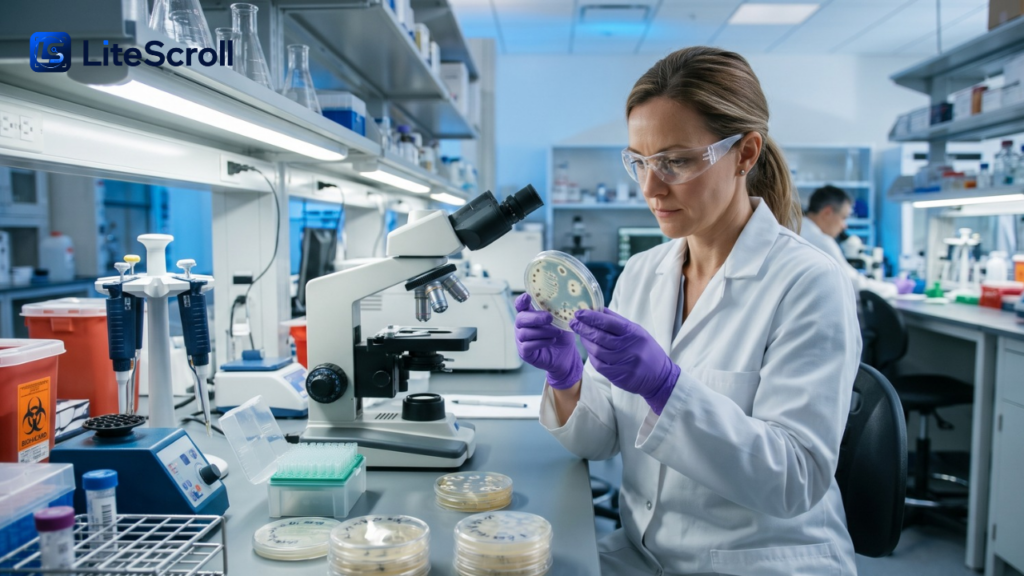
A product can look, smell, and perform normally while still containing unwanted microorganisms. That is why microbiological testing matters to manufacturers of cosmetics, foods, pharmaceuticals, medical devices, and household products. Laboratory results help businesses investigate contamination, assess manufacturing controls, and support decisions about product quality. However, a single passing result cannot establish that every unit in a production batch is safe, and the appropriate test depends on the product, intended use, and applicable requirements.
This guide explains common laboratory methods, sample handling, result interpretation, and how to select an independent testing partner. It focuses on U.S. product businesses and separates general quality-assurance practices from industry-specific legal obligations.
Understand the Purpose of a Microbial Quality Program
Microorganisms are present throughout the environment. Some are harmless in one setting yet unacceptable in another, while particular pathogens can present serious health risks. A well-designed microbiological testing program asks specific questions: Is the total microbial population within an established limit? Are particular organisms present? Does a preservative system continue controlling contamination? Has a cleaning process achieved its intended effect?
Identify the Decision Before Choosing a Test
Testing should serve a documented decision. A manufacturer may need to assess incoming ingredients, investigate a complaint, monitor a production environment, or verify a finished lot against product specifications. The same assay is not necessarily suitable for every situation. A microbiological testing request should identify the sample matrix, expected microorganisms, acceptance criteria, and intended use of the result.
Think of Testing as Verification, Not a Substitute for Prevention
A small number of negative samples cannot prove that contamination is absent everywhere. In food operations subject to relevant U.S. preventive-control rules, product testing and environmental monitoring may be components of verification when appropriate to the facility, food, and identified hazards. The regulations also call for scientifically valid written procedures under the relevant circumstances. GovInfo
Recognize the Main Categories of Laboratory Analysis
A strong microbiological testing plan distinguishes measurement of general microbial populations from detection of specified organisms and evaluation of a product’s ability to resist microbial growth. These questions produce different kinds of evidence and may require different sample quantities, methods, and reporting units.
Microbial Enumeration and Bioburden
Enumeration methods estimate the number of viable microorganisms recovered under defined conditions. Common measures include total aerobic microbial counts and yeast and mold counts. Bioburden describes the recoverable microbial population on or in a material before a defined processing step. Results can help teams recognize unusual trends, but they must be interpreted using method limitations and product-specific criteria.
For routine microbiological testing, ask whether the laboratory reports counts per gram, milliliter, item, or sampled area, and whether the method has been demonstrated to work with the product. A low reported count can be misleading if preservatives or other ingredients interfere with organism recovery.
Specified Organism and Pathogen Detection
Some projects require looking for named microorganisms rather than a total count. The organism panel depends on the material and risk assessment: food, cosmetics, and medical products have different relevant hazards. The FDA’s Bacteriological Analytical Manual provides established food and cosmetic analytical methods and points to other recognized references for specialized situations. FDA
Detection results should say what was tested, under which procedure, and in what amount of material. A result reported as not detected is not a claim that the entire facility or batch is permanently free of that organism.
Preservation, Antimicrobial Effectiveness, and Sterility
A preservative effectiveness or challenge test assesses whether a formulation controls introduced microorganisms under a defined protocol. Antimicrobial surface testing examines a different claim and may use standards developed for specific materials and exposure conditions. Sterility testing addresses another distinct question and has its own validated methods and limitations.
A laboratory offering microbiological testing should help clients distinguish USP microbial limits approaches from preservative effectiveness, antimicrobial efficacy, and sterility studies. These are not interchangeable labels, and a passing result under one method does not support every marketing claim.
Match the Testing Approach to the Industry
A sound project begins with how the product is made and used. Microbiological testing for a facial cream is not automatically the same as a test for ready-to-eat food, a reusable medical device, or a treated textile. Each category may have different contamination pathways, specifications, and regulators.
Food and Beverage Manufacturing
Food businesses may evaluate process hygiene, relevant pathogens, raw ingredients, and environmental sites according to the facility’s hazard analysis. Sampling plans must consider whether contamination could be unevenly distributed. The FDA’s food safety framework addresses product and environmental testing as appropriate verification activities, not a universal identical testing schedule for every manufacturer. GovInfo
Cosmetics and Personal Care Products
Water-containing cosmetics can be vulnerable to microbial contamination during production or consumer use. Microbiological testing may assess finished-product counts, specified contaminants, or preservative performance. The FDA’s cosmetics guidance discusses appropriate testing and preserving products against contamination during reasonably foreseeable storage and use. FDA+1
Pharmaceuticals and Medical Devices
Nonsterile drug products may require microbial enumeration and specified-organism assessment, while sterile products and certain devices have different testing and validation needs. A microbiological testing provider should clarify which compendial method, product characteristics, and regulatory expectations apply. Do not assume that every laboratory offering basic plate counts is equipped or accredited for a specialized regulated assay.
Disinfectants, Textiles, and Household Materials
A manufacturer advertising antimicrobial performance needs evidence relevant to its exact claim, organism, surface, and use conditions. Testing a disinfectant against one organism does not establish effectiveness against all microorganisms. The same principle applies to treated fabrics and plastic products: results are method-specific and should not be generalized beyond the tested conditions.
Plan Sample Collection Before Shipping
Reliable laboratory work begins before a sample reaches the bench. Poor collection can introduce contamination, while unsuitable storage or transport can change the microbial population. The right microbiological testing workflow specifies collection containers, sample quantity, labeling, temperature requirements, transport windows, and any preservation steps recommended by the laboratory.
Build Traceability Into Every Sample
Identify the product, batch or lot, collection point, sampling time, and person responsible. Document whether the sample is raw material, work in progress, finished goods, or an environmental swab. A chain-of-custody record helps prevent mix-ups and supports investigations when unexpected results appear.
Avoid Unapproved Changes to the Sample
Do not add disinfectant, transfer the sample into an unsuitable container, or alter storage conditions without instructions. If an urgent shipment is delayed, notify the laboratory before assuming the original method remains valid. Microbiological testing results are only as useful as the sample’s documented condition and representativeness.
Ask About Method Suitability and Quality Controls
A standard method can require adaptation or suitability studies for a particular product. Ingredients that inhibit organisms may also suppress their recovery during analysis. Neutralization, dilution, recovery studies, positive controls, and appropriate blanks help the laboratory establish whether a result is interpretable. A microbiological testing report should clearly identify the method used and any important deviations or limitations.
Understand Common Method References
Depending on the application, laboratories may work with USP chapters, FDA methods, ISO standards, ASTM methods, or AOAC procedures. The correct reference depends on the sample and the objective. Accugen Laboratories lists services involving USP 51, USP 61, USP 62, USP 71, microbial identification, and several antimicrobial effectiveness techniques, among other offerings. Availability of a listed service should be confirmed for the precise project. Accugen Labs+1
Evaluate Laboratory Competence and Accreditation Scope
ISO/IEC 17025 is an international standard addressing technical competence, impartiality, and consistent laboratory operations. Accreditation applies to a defined scope rather than automatically covering every method a facility advertises. Before commissioning microbiological testing, request a current certificate and scope, then verify that the relevant test and sample type are covered where accreditation is required. ISO+1
Distinguish Registration From Regulatory Approval
Some facilities describe themselves as FDA-registered. Registration should not be presented as government endorsement of all test results or products. The FDA specifically explains that it does not approve laboratories simply because they appear in registration systems. Assess a laboratory’s actual qualifications, methods, accreditations, and records instead of relying on one badge. FDA
Work With a Testing Partner That Fits the Project
An independent laboratory may support routine lot checks, development studies, failure investigations, and specialized methods. Businesses exploring microbiological testing can review Accugen Laboratories’ published services for microbial enumeration, identification, antimicrobial effectiveness, preservative testing, and quality-control support. The company describes itself as based in Addison, Illinois, and serving cosmetics, pharmaceutical, food, medical-device, textile, and other industries. These are the company’s service descriptions, so ask for a project-specific quotation and current scope documentation. Accugen Labs+1
Request an Itemized Proposal
Explain your product, intended decision, method requirement, number of samples, and requested turnaround. A credible microbiological testing proposal should indicate sample quantity, shipping conditions, test method, reporting format, pricing, and what happens if retesting or further identification is necessary. Some analyses require incubation periods that cannot safely be eliminated by paying for faster reporting.
Interpret the Report Without Overclaiming
Laboratory results need context. Read the sample description, units, detection or quantification limits, method reference, observations, and any uncertainty or qualification relevant to the decision. A microbiological testing result outside a company specification may trigger an investigation, but the appropriate action depends on the organism, product, process, and regulatory requirements.
Investigate Trends Instead of Isolated Numbers Alone
Repeat results from comparable products and sampling points can reveal patterns that one test misses. Do not average away an unacceptable result or rerun a sample solely to obtain a convenient passing number.
Maintain Clear Release and Corrective-Action Rules
Decide beforehand who reviews results, who can release a lot, and what happens after a failure. Include escalation to quality, regulatory, and technical specialists when needed. Microbiological testing supports those decisions but does not independently certify that a product is safe for every use or compliant with every law.
Build an Efficient Testing Schedule
Test frequency should follow the actual hazards, process capability, product history, customer specifications, and applicable legal obligations. A new formulation or changed supplier may justify more extensive verification than a stable product with strong historical controls. Companies benefit when microbiological testing is integrated with manufacturing records and corrective-action reviews rather than ordered only after a customer complaint.
A Practical Checklist Before Sending Samples
- Define the product, relevant hazards, and the decision the result must support.
- Specify the required method, organisms, acceptance criteria, and reporting units.
- Confirm the laboratory’s competence and accreditation scope where applicable.
- Agree on sample numbers, collection procedures, packaging, and shipping conditions.
- Request a written estimate covering turnaround and follow-up investigations.
- Identify the person responsible for reviewing results and documenting any corrective actions.
Frequently Asked Questions
What is the main purpose of laboratory microbial analysis?
Microbiological testing measures or detects selected microorganisms under defined conditions. Manufacturers use the evidence to investigate contamination, monitor quality, and assess whether specific requirements are met. The result represents the tested samples and methods, not an absolute guarantee about an entire product line.
Is one negative result proof that a product is safe?
No. Sampling cannot establish that every unit is contamination-free. Reliable decisions depend on representative collection, suitable methods, preventive controls, historical data, and the standards relevant to the product.
Do all products need the same microbial tests?
No. Foods, cosmetics, drugs, devices, and antimicrobial surfaces can require different methods and criteria. A microbiological testing program should follow intended use and a documented assessment of hazards rather than a generic package.
Does ISO accreditation cover everything a laboratory offers?
No. ISO/IEC 17025 accreditation is associated with a specified scope. Confirm the particular method, applicable matrix, and current status with the accreditation body when accredited work is needed.
How long does a laboratory project take?
Turnaround varies with the method, organism, incubation or confirmation requirements, sample condition, and workload. Ask the provider for a realistic written estimate before planning production release or a regulatory submission.
Can a passing report support an antimicrobial marketing claim?
Only when the method, organisms, conditions, results, and applicable rules support the exact claim. Microbiological testing of one product under one protocol should not be stretched into broad statements about all pathogens or settings.
Conclusion
Sound product quality programs combine preventive controls with carefully selected laboratory evidence. Microbiological testing is most valuable when samples are collected properly, methods match the product, and results are interpreted against documented criteria. Choose a laboratory based on relevant competence and scope, not only advertised speed or price. With clear responsibilities for investigation and corrective action, testing becomes a practical tool for better manufacturing decisions.