
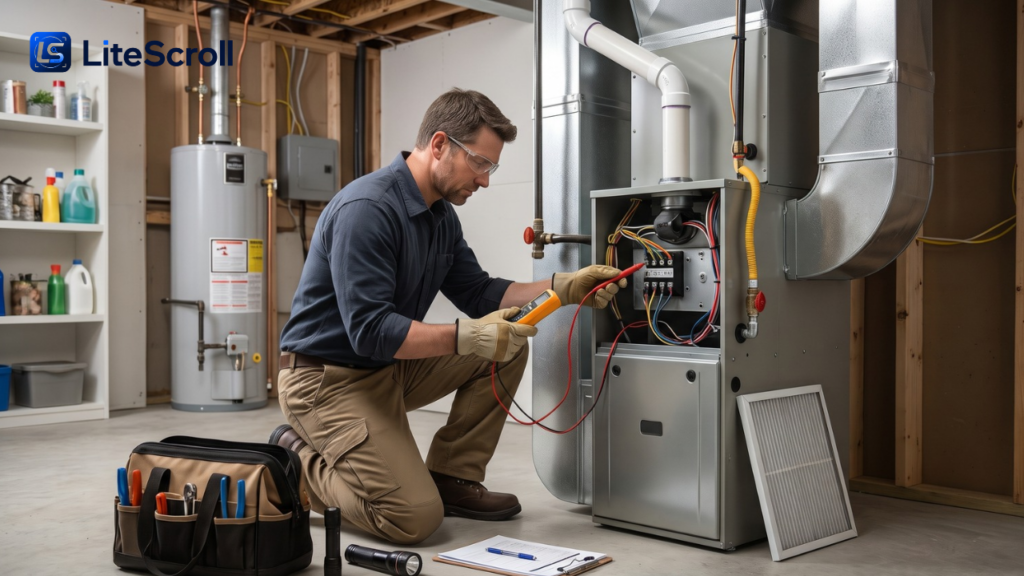
A furnace that stops heating at midnight can make a familiar home feel uncertain, especially when children, older adults, or someone with a health concern needs a comfortable temperature. Searching for a company that answers late-night furnace calls is understandable, but the first decision is whether the situation involves a possible gas or carbon monoxide emergency. A service appointment can address a mechanical breakdown; it cannot replace emergency responders when dangerous conditions are suspected.
Decide Whether the Problem Is a Safety Emergency
Not every heating interruption warrants the same response. A silent furnace and an ordinary thermostat error may allow a few basic checks, while a gas odor, carbon monoxide alarm, or symptoms of poisoning demand evacuation. Before choosing a company that answers late-night furnace calls, make sure everyone in the household is safe and that no warning signs point to an immediate hazard.
If You Smell Gas, Leave Instead of Troubleshooting
A rotten-egg or sulfur-like smell, unusual hissing near gas equipment, or another suspected leak must be treated seriously. Southwest Gas instructs customers to leave the area immediately and, from a safe location, call 911 and the utility’s emergency number, 877-860-6020. Do not operate switches, use a phone inside the affected area, or attempt a repair. Southwest Gas Corporation
In this situation, a company that answers late-night furnace calls is not the first contact. Emergency services and the gas utility must evaluate the hazard and explain when it is safe to return. Do not restart a gas furnace until the appropriate professionals have cleared the problem.
Take Carbon Monoxide Alerts Just as Seriously
Carbon monoxide is colorless and odorless. Headache, dizziness, nausea, weakness, and confusion are possible signs of exposure. The CDC advises immediate emergency action for suspected poisoning, and the CPSC recommends leaving a building when a CO alarm signals danger and calling emergency services from outside. CDC+1
Do not silence a detector and return to sleep. If someone searches for a company that answers late-night furnace calls because an alarm activated, the priority is getting people into fresh air and calling 911, not waiting indoors for an HVAC appointment.
Make Only Safe, External Checks Before Calling
Once you have ruled out immediate danger, a few ordinary household checks can help you describe the failure accurately. A company that answers late-night furnace calls can use your observations to decide what equipment and expertise to send.
Confirm the Thermostat Settings
Check whether the thermostat is set to heat, the requested temperature is above the current room reading, and any schedule or vacation mode is correct. Never take apart the thermostat wiring while troubleshooting at night.
Review Power and Airflow Without Opening the Unit
Observe whether other appliances have power. If the thermostat is working and the furnace is silent, note whether a circuit breaker appears tripped. Repeated breaker trips can signal an electrical fault; do not repeatedly reset the circuit. A company that answers late-night furnace calls should handle anything beyond routine user maintenance.
Know When to Stop Checking
Unusual burning smells, repeated shutdowns, visible scorching, loud metal noises, or water near electrical equipment all justify stopping and contacting a qualified technician. Do not repeatedly attempt ignition or relight an older pilot without following manufacturer and professional safety guidance. A simple observation is useful; an improvised internal repair can turn a manageable outage into a dangerous one.
Recognize Problems That Need Professional Diagnosis
Furnaces can stop heating because of thermostat faults, ignition failures, fan motor trouble, restricted airflow, control-board problems, or a compromised safety component. When hiring a company that answers late-night furnace calls, describe what the system actually does rather than insisting a particular part is defective.
No Heat Despite an Operating Fan
Air blowing from vents without warming the rooms can have several explanations, including a heating cycle that never starts or one that shuts down prematurely. A household should not bypass a limit switch or another protective device to force the furnace to operate.
Repeated Starts and Stops
Short cycling can be associated with airflow restrictions, sensor problems, thermostat issues, or equipment sizing and installation conditions. For a company that answers late-night furnace calls, a clear timeline of symptoms can be more useful than a homeowner’s attempt to dismantle the system.
Noise, Odors, or Uneven Heat
Rattling, squealing, or unusual vibration may indicate mechanical or installation problems, while cold rooms can also reflect ductwork and balancing issues. If the odor suggests gas or an immediate fire hazard, follow emergency guidance instead of scheduling ordinary repairs. Otherwise, document the pattern and ask for an inspection that addresses the cause rather than just the symptom.
Understand What Around-the-Clock Service Actually Means
The phrase 24/7 can refer to a live telephone line, emergency dispatch, or technicians available for visits throughout the night. A company that answers late-night furnace calls should clearly explain whether an actual technician can attend your address now, what the estimated arrival window is, and whether the visit carries separate charges.
A Local Example in Las Vegas
For homeowners comparing emergency heating providers, Pure Plumbing & Air describes itself as a company that answers late-night furnace calls through its advertised 24/7 furnace repair service. Its Las Vegas page mentions no-heat emergencies, ignition and blower problems, thermostat issues, and around-the-clock assistance. It also advertises a usual emergency arrival of about an hour and says it does not add a night or weekend surcharge. These are the business’s published claims, not a guarantee of a particular arrival time, repair outcome, or final price. Pure Plumbing & Air
Ask About the Actual Dispatch Window
A company that answers late-night furnace calls should tell you if a technician is being dispatched, whether the arrival estimate is provisional, and what happens if service is delayed. Ask for a callback or message when the technician is on the way, and keep your phone accessible.
Verify the Contractor Before Authorizing Work
An emergency does not eliminate the need for basic verification. Nevada maintains an official contractor license search through the Nevada State Contractors Board. Check that the business name, license classification, and status align with the proposed work. A company that answers late-night furnace calls should be willing to provide identifying information and explain who will arrive at your home. nsla.nv.gov
Clarify the Diagnostic Fee and Repair Estimate
Ask whether a trip or diagnosis charge applies and whether it can be credited toward an approved repair. Confirm how labor, replacement parts, taxes, and additional visits are billed. Even when a business advertises no after-hours surcharge, that does not mean the entire repair is free or that every part is in stock.
Expect an Explanation Before the Repair
A technician should explain the observed problem, proposed work, approximate cost, and any safety finding that makes continued operation inappropriate. Choosing a company that answers late-night furnace calls should involve clear consent and documentation, not pressure to approve an expensive replacement at the doorstep.
Give the Dispatcher the Details That Matter
An efficient call starts with your address and safe callback number, followed by the make and approximate age of the furnace if known. Say whether there is no airflow, cool airflow, repeated cycling, or a thermostat error. Mention unusual sounds and whether a detector has activated—but follow emergency instructions immediately if gas or carbon monoxide is suspected.
Tell a company that answers late-night furnace calls about access instructions, pets, parking limitations, and whether anyone inside needs special assistance. If a recent repair, electrical outage, or filter change preceded the failure, mention it. Do not speculate that one component must be replaced based solely on an online checklist.
Stay Comfortable While the Furnace Is Off
Keep an eye on vulnerable household members and move to a safely heated location if conditions become uncomfortable or unsafe. Contact local assistance or emergency services when someone’s health is at risk; do not wait indefinitely for a contractor.
If using a listed portable electric heater, follow its instructions and recognized fire-safety practices: place it on a stable surface, away from combustible materials, and plug it directly into an appropriate wall outlet rather than an extension cord or power strip. Never use a gas oven, charcoal grill, or outdoor fuel-burning equipment to heat indoor rooms. U.S. Consumer Product Safety Commission+1
A company that answers late-night furnace calls may help restore heat quickly, but any temporary comfort plan must put fire and combustion safety first. Avoid sleeping with unsafe supplemental heating equipment operating or improvising an open-flame heat source.
Understand Repair Versus Replacement Decisions
One nighttime breakdown does not prove a furnace must be replaced. A technician should identify the failed component, explain whether repair is feasible, and evaluate safety concerns. Cost comparisons depend on equipment age, condition, energy use, warranty coverage, and expected future reliability. A company that answers late-night furnace calls should discuss both options when replacement is genuinely relevant, without treating the urgency of the moment as a sales opportunity.
Request Documentation You Can Revisit
Ask what was tested before the technician left and what symptoms should prompt another call. For extensive work, a second opinion may be sensible when the home is safe and time permits.
Prevent the Next Overnight Heating Failure
Annual professional inspection is important for combustion equipment. The CDC recommends qualified servicing of heating systems and other fuel-burning appliances every year. Routine filter care, clear vents, working alarms, and attention to early symptoms can help identify problems before they become urgent. CDC
Even after a company that answers late-night furnace calls completes a repair, schedule any recommended follow-up work and keep a record of unusual behavior. A maintenance plan cannot prevent every unexpected failure, but it can reduce neglect and make future service conversations easier.
A Short Checklist for an After-Hours Call
- Evacuate immediately and call 911 and the utility if you suspect a gas leak or carbon monoxide danger.
- If safe, observe thermostat settings, ordinary household power, and accessible filter condition without opening equipment.
- Record symptoms, approximate system age, and any recent service history.
- Ask about live dispatch, arrival estimates, diagnostic fees, and parts availability.
- Verify contractor credentials and obtain approval terms before repair work.
- Save the invoice, diagnosis, warranty, and follow-up instructions.
Frequently Asked Questions
Is a furnace outage always an emergency?
Not always. A routine thermostat issue is different from suspected gas leakage or a carbon monoxide alarm. Evaluate safety first, then household temperature and the needs of vulnerable occupants. A company that answers late-night furnace calls can discuss dispatch for a mechanical outage, but immediate hazards belong with emergency responders.
Can a technician fix the furnace on the first visit?
Sometimes, particularly when the cause is identifiable and a suitable replacement part is available. Ask what can realistically be completed during the visit rather than assuming an overnight appointment guarantees a full repair.
Should I reset a tripped breaker repeatedly?
No. A breaker that trips again may indicate a fault requiring professional assessment. Do not override safety equipment or open powered furnace compartments. When contacting a company that answers late-night furnace calls, mention the repeated trip and leave the equipment off.
Does a 24-hour phone line guarantee a one-hour arrival?
No. A stated estimate can change with workload, travel, and parts availability. Confirm whether a technician has actually been assigned and request updates. Advertised response targets should not be interpreted as unconditional guarantees.
How can I check a Las Vegas HVAC contractor?
Use the Nevada State Contractors Board’s license search and compare the business details and license classification to the work proposed. Ask for a written explanation of diagnosis, charges, and any warranty before authorizing substantial repairs.
What should I do if the CO alarm sounds at night?
Leave the building immediately with everyone inside, move to fresh air, and call 911 from a safe location. Do not re-enter until emergency responders say it is safe. An HVAC company should only assess the appliance after the immediate danger has been addressed.
Conclusion
A midnight heating failure calls for calm decisions, but serious warning signs require immediate evacuation rather than DIY repair. Finding a company that answers late-night furnace calls is most useful after you confirm the home is safe, describe the symptoms accurately, and verify that a qualified technician is available. Ask clear questions about fees, diagnosis, and timing before authorizing work. With responsible maintenance and documented repairs, homeowners can be better prepared for the next cold night.