
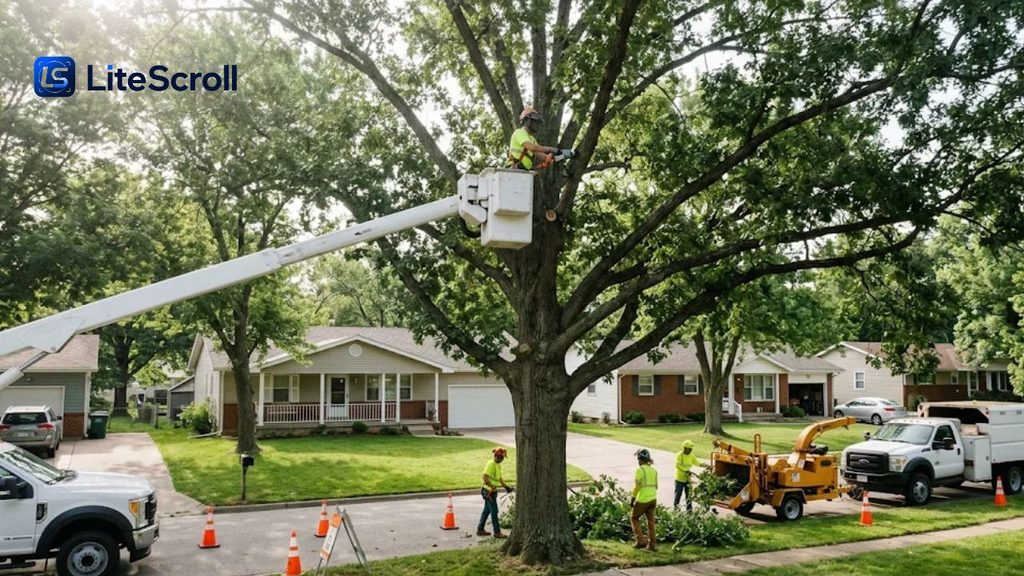
Mature trees bring shade, character, and privacy to homes throughout southwest Missouri. They can also develop weak branches, damaged trunks, and conflicts with roofs or driveways as they grow. Choosing tree care services is therefore about more than making a yard look tidy.
Each situation calls for a different decision: prune selected branches, inspect a suspicious defect, grind an unwanted stump, or remove a tree that cannot reasonably be retained. This guide explains those choices, how to compare contractors, and what to ask before signing an estimate.
Start With a Tree Assessment, Not a Chainsaw
A leaning trunk, dead limb, or hollow-looking branch does not always mean immediate removal is necessary. Trees can have defects without posing the same level of risk in every setting. A qualified professional considers the condition of the tree, what could be struck if it fails, and how frequently people use the surrounding area.
Good tree care services begin by identifying the real objective. Is a limb rubbing the roof? Has a storm fractured a major branch? Is a mature oak blocking construction? Clear answers reduce unnecessary cutting, which can damage a tree and sometimes create new problems.
Understand the Signs That Deserve Attention
Look for large hanging branches, cracks in major limbs, sudden changes in lean, exposed or lifting roots, and significant damage after a storm. Fungal growth or cavities can be reasons to request an inspection, but a photograph alone cannot establish whether a tree is safe. Keep people away from an obvious hazard until a competent assessment is completed.
The International Society of Arboriculture recommends qualified arborists for complex tree-risk and pruning decisions. Their advice can clarify when observation is safer than cutting. treesaregood.org
Choose the Right Type of Work
Selective Pruning and Crown Maintenance
Proper pruning removes or reduces branches for a specific purpose: improving structure, providing necessary clearance, addressing deadwood, or reducing a known risk. A contractor should explain which limbs will be treated and why.
When comparing tree care services, ask whether the proposed plan follows accepted arboricultural practices. The University of Missouri Extension warns against topping, the practice of cutting major limbs to arbitrary stubs. Topping can produce weak regrowth and leave large wounds instead of establishing a sound long-term structure. MU Extension
Removal When Retention Is Not Reasonable
Removal may be appropriate when a tree is dead, severely compromised, or presents an unacceptable risk that cannot be reduced adequately. It may also be needed for a permitted building project after alternatives have been evaluated. Where a tree stands close to a house, controlled dismantling and rigging may be safer than felling it in one piece.
Professional tree care services should describe how crews will protect roofs, fences, lawns, nearby trees, and pedestrians. Ask about equipment access, the planned direction of work, debris handling, and whether the estimate includes hauling away the trunk and branches. Never assume that stump removal is included with tree removal.
Stump Grinding and Site Restoration
Once a tree has been removed, the remaining stump may interfere with mowing, a walkway, or future planting. Grinding reduces the stump using specialized equipment, but the depth, treatment of nearby roots, and final grading need to be specified. Underground utilities and irrigation lines also deserve consideration before machinery arrives.
Homeowners booking tree care services should clarify whether the crew removes wood chips, supplies topsoil, or leaves the area ready for grass. Grinding does not necessarily extract every root, and decomposition continues underground over time.
Emergency Response After a Storm
Ice and wind can leave branches suspended overhead or resting against structures. A partly fallen tree may be under enormous tension, making amateur chainsaw work especially dangerous. The first step is to keep people clear, not rush into cutting. If wires are involved, stay away and contact the utility provider or emergency services as appropriate.
Emergency tree care services should be organized around immediate hazards, site access, and qualified crews. The University of Missouri Extension advises patience when assessing storm-damaged trees that might recover. MU Extension
Understand Springfield’s Local Conditions
Southwest Missouri’s weather makes structural tree maintenance important, but the right season for pruning depends on species, purpose, and urgency. The University of Missouri Extension generally favors dormant-season pruning for many trees. Dead or hazardous branches may require attention sooner, regardless of the calendar.
For oak trees, timing deserves special care. Missouri Extension advises avoiding unnecessary pruning during the higher-risk oak-wilt period, commonly described as mid-March through mid-July. Exceptions and wound-management recommendations can depend on current guidance and the circumstances. Ask a knowledgeable local professional before scheduling nonurgent work. MU Extension
Tree care services around Springfield should also account for the location of the tree relative to streets, sidewalks, and utilities. Work involving a public right-of-way may require city involvement or authorization. Springfield’s urban forestry information advises contacting the city about right-of-way tree maintenance and permits when applicable; do not assume the rules for a privately owned backyard tree are identical. e |
Keep Power-Line Work Separate
Branches near overhead electrical conductors present a serious hazard. Tree wood, ropes, equipment, and nearby objects may become dangerous when they contact energized lines. OSHA describes specific qualification and work-practice requirements for line-clearance tree trimming.
If you need tree care services near power lines, contact the utility and use personnel qualified for that work. A general landscaping crew or ordinary tree-trimming estimate is not proof that the team is authorized and trained for electrical line clearance. Never attempt to reach or move a branch touching a line. Occupational Safety and Health Administration
How to Evaluate a Local Contractor
Verify Relevant Qualifications
An ISA Certified Arborist credential demonstrates that an individual has met the organization’s examination and experience requirements. It does not, by itself, certify every employee or guarantee that a company can safely perform every specialized task. Ask whether a certified arborist will assess the specific tree and who will supervise the work.
Before hiring tree care services, request evidence of relevant liability insurance and workers’ compensation coverage. Confirm the names on the documents and ask whether your project requires particular licensing, authorizations, or permits. Check references for jobs similar in size and difficulty, especially when trees stand near buildings.
Compare Written Scopes, Not Just Totals
Two companies can quote very different prices because their plans cover different work. One estimate might include climbing, rigging, trunk removal, chip disposal, and lawn protection. Another might cover only cutting the tree down and leaving the material. Make the requested outcome explicit before comparing the numbers.
For tree care services, a useful written proposal identifies the tree, precise branches or sections to be addressed, equipment access, debris disposal, stump work, timing, and any exclusions. Written change approval prevents misunderstandings.
Ask About Safety Procedures
Tree work includes falling objects, work at height, chainsaws, chippers, and heavy equipment. OSHA warns about overhead lines and falling branches, among other hazards. Professional contractors should plan the site, restrict access, use appropriate equipment, and keep bystanders away from the work area. Occupational Safety and Health Administration
Good tree care services protect neighbors as well as crew members. Ask where trucks will park, how falling sections will be controlled, and whether pedestrian access needs temporary restriction. Homeowners should not enter a marked work zone to take photographs or move debris while operations are underway.
What Makes a Quote More Expensive?
A broad tree above a roof may require technical rigging, while a similar tree in an open field could be easier to access. Power lines, slopes, fences, damaged limbs, equipment restrictions, and debris volume can all alter the scope.
When reviewing tree care services, expect an on-site assessment for complex work. Ask for separate prices when you are considering pruning versus removal, and distinguish stump grinding from hauling debris.
Plan the Workday and Cleanup
Move vehicles, secure pets indoors, and identify sprinkler heads, fragile landscaping, or other site features before the crew arrives. Discuss whether a driveway or lawn will support the necessary equipment and who is responsible for repairing incidental damage. Arrange access for any gates and confirm where debris will be staged.
After tree care services are completed, inspect the property with the crew leader. Check whether agreed branches were addressed, debris has been removed, and the stump or ground surface matches the contract.
Avoid Unnecessary Follow-Up Cutting
A freshly pruned tree may look different from the dense shape homeowners expect. Resist asking workers to remove additional healthy branches purely to make every side symmetrical. Discuss the tree’s biology and long-term structure before requesting changes to an agreed pruning plan.
A Springfield Company Worth Researching
The Trufast website describes a locally owned business based in Springfield, Missouri, serving nearby communities such as Ozark, Nixa, Republic, Willard, and Rogersville. The company lists trimming, removal, stump grinding, emergency storm work, and arborist consultations. It also says an ISA Certified Arborist is on staff and advertises free estimates across its core service area. These are company-published details, so confirm current availability and scope directly before booking. Trufast Tree Service
For local residents researching tree care services, Trufast’s service descriptions can help frame a conversation about preserving a healthy tree versus removing a hazardous one. Its site states that stump grinding is a separate service and that some farther-area visits may involve an estimate fee. Ask for the exact terms associated with your address, especially after a severe storm when scheduling can change.
The company also reports carrying liability coverage and workers’ compensation insurance. Request a current certificate instead of relying solely on website wording. Independent verification and a written project scope remain useful regardless of a contractor’s reputation, testimonials, or published review score.
Seven Questions Before You Approve the Job
- What problem is the proposed work intended to solve?
- Can the tree be retained safely through selective pruning or monitoring?
- Who will assess the tree, and what qualifications do they hold?
- How will nearby buildings, lines, gardens, and people be protected?
- Which removal, hauling, stump, and restoration tasks are included?
- Are insurance, necessary permissions, and the work schedule confirmed?
- How will unexpected conditions and final cleanup be handled?
These questions make tree care services easier to compare and help avoid paying for work you did not intend to authorize.
Frequently Asked Questions
How do I know whether a tree needs removal?
Look for major structural damage, dead sections, or a significant defect close to an occupied area, but do not diagnose safety from appearance alone. A qualified arborist can assess the tree, likely targets, and whether pruning, monitoring, or removal is appropriate.
Is topping a good way to make a tree safer?
Generally, no. University of Missouri Extension warns that topping can produce weak regrowth and damage tree structure. A trained arborist can recommend selective reductions or other appropriate treatment instead of indiscriminately cutting major limbs to stubs.
When should I prune oak trees in Missouri?
Dormant-season pruning is commonly preferred for many trees. Missouri Extension warns about increased oak-wilt risk during part of spring and summer. Urgent hazards can require different action, so consult a local professional familiar with current species-specific guidance.
Does removal normally include stump grinding?
Not automatically. Contractors may price felling, hauling, grinding, and site restoration separately. Ask for each item in the written estimate and confirm the depth and final condition of the area before work begins.
Can a regular tree crew trim limbs next to power lines?
Do not assume so. Utility-related clearance work has special hazards and qualification requirements. Keep away from the area, notify the utility, and ensure the work is handled by people qualified for line-clearance operations.
What should I check before choosing a contractor?
Review relevant qualifications, current insurance evidence, comparable references, a detailed scope, and safety procedures. Professional tree care services should explain why the proposed work is appropriate, not merely offer a quick price over the telephone.
Conclusion
Healthy trees deserve informed maintenance, and hazardous ones demand careful professional judgment, so reliable tree care services require a clear plan for the property afterward. Choosing tree care services in Springfield means assessing the actual problem, checking qualifications and insurance, and comparing complete written proposals. Seasonal risks, power lines, and storm damage all require special attention rather than improvised cutting. A well-planned job protects your property while giving valuable trees the best reasonable chance to thrive.