
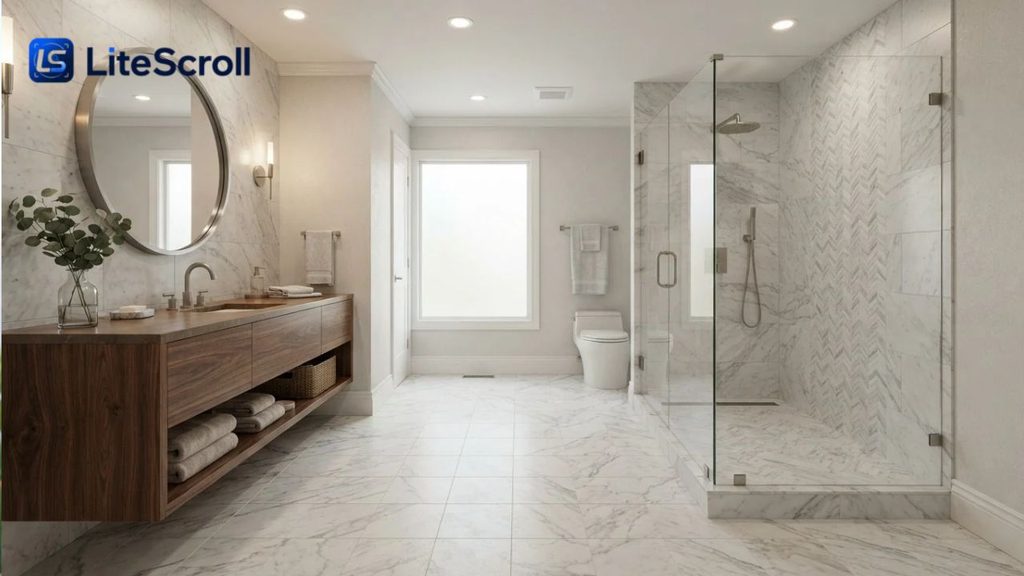
A new tiled floor can transform a kitchen or bathroom, but material samples rarely tell the whole budget story. Homeowners comparing tile installation costs need to consider the tiles, the condition of the underlying surface, labor, and how the room will be used. Marble and ceramic can both look beautiful. They differ, however, in material pricing, installation demands, and the care they need afterward.
A useful estimate is a range tied to a written scope, not a single online number. This guide explains current U.S. pricing references, offers transparent examples, and shows how to compare contractors without overlooking important preparation or waterproofing work.
What Recent Pricing Guides Actually Tell You
HomeAdvisor’s accessible marble-flooring cost guide describes an installed range of roughly $8 to $50 per square foot, with natural marble material prices varying widely by grade and selection. Its ceramic-and-porcelain guide presents a broad average installed range of about $5 to $45 per square foot. These are different project datasets and product categories, so they should not be treated as identical samples or guarantees for one address. Home Advisor+1
Angi’s ceramic-tile guide, updated in October 2026, cites typical professional projects from $1,300 to $7,500, with a reported average around $4,800. The difference between that figure and another publisher’s average is a reminder that tile installation costs depend on methodology, job size, and scope. A precise local quote should always outweigh a generic national midpoint. Angi
Be Careful With the Word “Recent”
You may encounter a citation described as a recent study by HomeAdvisor. During this review, that specific address returned a not-found response, so its publication date and original figures could not be confirmed. Do not present it as a verified new study. Instead, consult HomeAdvisor’s accessible marble and ceramic cost guides, check their update dates, and obtain quotes for your own project.
Compare the Materials Beyond Their Appearance
Ceramic: Flexible Choices for Everyday Rooms
Ceramic products come in numerous sizes, finishes, and designs. Glazed options can be relatively straightforward to wipe clean, while suitable floor-rated products work well in kitchens and other busy areas. Not every ceramic wall tile can handle floor traffic, and glossy products may be inappropriate where a floor is frequently wet.
When budgeting tile installation costs for ceramic, compare the exact floor-rated product rather than an attractive sample from a wall display. Tile dimensions, pattern complexity, and necessary cutting can affect how much labor is required. A simple straight layout may be easier to fit than a small mosaic or intricate herringbone arrangement.
Marble: Natural Variation With More Care Requirements
Marble is a natural stone that can deliver distinctive veining and a sophisticated appearance. Its mineral composition also makes it vulnerable to etching from acidic substances, even when treated with a suitable sealer. Some stones and finishes are more sensitive to moisture, scratching, or chemical exposure than a homeowner might expect.
These characteristics can affect tile installation costs in two ways: the stone itself may be more expensive, and the installation may need greater care in handling, substrate preparation, and finishing. Ask the supplier about the exact stone, finish, recommended treatment, and suitability for the proposed location. Natural beauty should not be mistaken for zero maintenance.
Why Porcelain Is a Separate Comparison
Porcelain is a type of ceramic tile with a low water-absorption classification. It may be worth considering alongside conventional ceramic and marble, particularly for certain floors or wet areas. However, select by the manufacturer’s application guidance rather than assuming any entire category is suitable for every space.
Six Factors That Can Change the Final Invoice
1. Total Area and Tile Layout
Measure each rectangular section in feet and multiply length by width. For irregular rooms, divide the shape into smaller areas and add them. Flooring contractors may need additional tile for offcuts, broken pieces, pattern alignment, or future repairs. The correct allowance depends on size, orientation, and layout, not one percentage that fits every project.
Tile installation costs rise with area, but small bathrooms may have a higher effective per-square-foot labor rate because contractors still need setup, travel, and detailed cutting. Be sure a square-foot estimate includes all the pieces required for the selected pattern.
2. Removing What Is Already There
Removing old tile can require demolition, debris hauling, and preparation of the exposed substrate. HomeAdvisor and Angi cost guides treat removal as a potentially separate project expense. Some jobs also reveal damaged underlayment or hidden moisture that cannot be priced accurately from photos alone. Angi+1
When evaluating tile installation costs, ask whether demolition, disposal, dust containment, and any repair allowance appear in the quote. This avoids comparing an installation-only offer with another proposal that includes a full tear-out and replacement.
3. Flatness, Rigidity, and Underlayment
Tile needs an appropriate substrate. The Ceramic Tile Education Foundation emphasizes flatness, adequate rigidity, approved setting methods, and movement accommodation. Natural stone assemblies can demand more stringent structural preparation than many ceramic installations. A visually level surface is not necessarily flat enough for the chosen format. CTEF
Unexpected substrate work can change tile installation costs substantially. Ask the installer to explain whether self-leveling products, backer board, membranes, reinforcement, or repairs are required. The proposal should describe what happens if existing conditions are different once the old floor is removed.
4. Labor and Pattern Complexity
A straightforward floor with simple cuts is different from a shower with niches, angled edges, multiple planes, or a patterned border. Larger tiles can introduce handling and substrate-flatness challenges, while small mosaics require more alignment and grout work. Marble adds possible challenges with stone variation and sensitive finishes.
Compare tile installation costs using identical drawings and material selections. Ask whether labor includes cutting, setting, grout, sealant at movement joints, cleanup, and return visits. A lower labor price is not better value if necessary work is omitted.
5. Wet-Area Waterproofing
Neither a ceramic tile face nor a marble tile face makes an entire shower waterproof. The Tile Council of North America notes that grout joints are not waterproof; appropriate shower construction must protect surrounding materials through its specified substrate and waterproofing method. Tile Council of North America
For bathroom tile installation costs, separate the surface finish from the full wet-area assembly. Ask about the membrane, drain integration, corners, penetrations, and any required tests or inspections. A quote that ignores these elements may be incomplete, even when the finished tile looks convincing.
6. Location, Delivery, and Scheduling
Local wages, parking restrictions, stairs, material supply, and access hours can all influence a contractor’s price. Specialty marble may require extra handling or coordination. Long lead times can disrupt other renovation trades if products are selected late.
A practical tile installation costs estimate includes delivery and jobsite logistics, not merely a multiplying factor applied to floor area. Request a realistic sequence for demolition, preparation, setting, grouting, curing, and reopening the space.
Build Two Example Budgets Without Double Counting
Consider a 100-square-foot kitchen floor. At an illustrative installed allowance of $12 to $20 per square foot for an uncomplicated ceramic installation, the initial calculation is $1,200 to $2,000. If a separate quoted removal and repair package costs $600, the illustrative total becomes $1,800 to $2,600. These are hypothetical planning assumptions, not a contractor’s offer or a nationwide price claim.
Now consider the same area with marble at a hypothetical installed allowance of $20 to $35 per square foot. The starting figure becomes $2,000 to $3,500. Add only exclusions that have actually been identified, such as a specified substrate improvement or a more complex layout. These figures fall within the broad market ranges reported by cost publishers, but actual tile installation costs may sit outside them.
Do Not Multiply the Same Work Twice
If a quote says “installed,” establish precisely what that includes before adding labor again. Likewise, if a supplier’s per-square-foot rate covers only the tile, add setting materials and installation separately. Keep a worksheet with measured area, purchase quantity, material unit price, labor scope, removal, preparation, and contingencies.
A Small Contingency Is Not a Substitute for Inspection
Set aside an amount appropriate to the uncertainty of the job, particularly in older homes. But have serious water, structural, or movement problems assessed before using a generic buffer to disguise an unknown scope. Honest planning can prevent a project from appearing cheaper than it is.
Choose a Qualified Installer and Compare Written Quotes
A reliable estimate should identify tile brand or product, format, finish, pattern, grout selection, substrate system, waterproofing where necessary, movement joints, and the intended completion process. Ask for evidence of relevant experience and applicable insurance or licensing. Requirements differ by location and project.
The Ceramic Tile Education Foundation recommends checking workmanship, compatible materials, substrate conditions, and realistic curing requirements. During a site visit, ask how the team will protect surrounding rooms and communicate discoveries. Contractors should be able to explain the chosen installation system rather than offering only a price per square foot. CTEF
For a meaningful tile installation costs comparison, obtain multiple proposals covering the same drawings and allowances. Mark exclusions and provisional sums in a separate column. Confirm payment milestones, change-order approval, warranty terms, and who handles permits if any are required. Avoid paying solely on the basis of an attractive photograph or a verbal promise.
Think About Maintenance and Lifetime Value
Marble may need careful cleaning, attention to etching, and product-specific sealing guidance. Many glazed ceramic tiles are relatively simple to maintain, although grout and textured finishes still require cleaning. Neither material is immune to chips, cracks, or damage from poor installation.
Upfront tile installation costs are only part of the ownership decision. Ask about repairability, availability of spare tiles, suitable cleaners, and what happens if a future plumbing repair requires opening the floor. Purchasing a few compatible replacement pieces can help, but color lots may change over time.
Common Mistakes to Avoid Before Ordering
Do not choose a wall tile for a floor without checking its application rating. Do not assume polished marble will remain visually unchanged after acidic spills. Never omit waterproofing in a shower because the tile itself seems water resistant. Avoid selecting a contractor who cannot explain preparation and movement joints.
The best way to control tile installation costs is to define the project carefully, choose appropriate materials, and approve variations in writing. A lower initial number that excludes necessary work can turn into a more expensive renovation once demolition begins.
Frequently Asked Questions
Is marble always more expensive than ceramic?
Not in every possible product comparison. Standard ceramic often costs less than selected marble, but handmade or specialty ceramic can also be expensive. Compare equal areas, installation complexity, and fully specified quotes rather than assuming material labels alone determine tile installation costs.
How accurate are online cost calculators?
They can help test scenarios, but they cannot inspect concealed moisture, uneven substrates, or site access. Use them to establish a preliminary range and ask a qualified local contractor to assess the property before relying on a final figure.
Should I add extra tile for cutting waste?
Usually, yes, but the appropriate allowance depends on the pattern, tile dimensions, shape of the room, and installer recommendations. Ask for the purchase quantity separately from finished square footage so that tile installation costs are transparent.
Do showers require waterproofing behind tile?
Yes, the installation needs a suitable approved wet-area system. Tile and grout should not be treated as the waterproof barrier. The correct assembly, drain detailing, and testing depend on local requirements and the selected products.
Can I install marble or ceramic myself?
Simple dry-area projects may be manageable for experienced homeowners, but substrate problems, heavy stone, and showers introduce substantial risks. Professional installation is often sensible where failure could damage the building or create safety hazards.
How can I keep the budget from growing unexpectedly?
Confirm the exact scope, allow for necessary removal and substrate work, order samples early, and require written change approval. Tracking tile installation costs by material, preparation, and labor makes it easier to see which decisions change the total.
Conclusion
Marble and ceramic can both be good choices when their appearance, maintenance, and installation requirements match the room. Realistic tile installation costs include preparation, workmanship, and any wet-area protection rather than the tile price alone. Use published guides for context, then obtain local itemized proposals and verify what each one includes. A well-defined project is easier to budget, maintain, and enjoy long after the work is finished.