
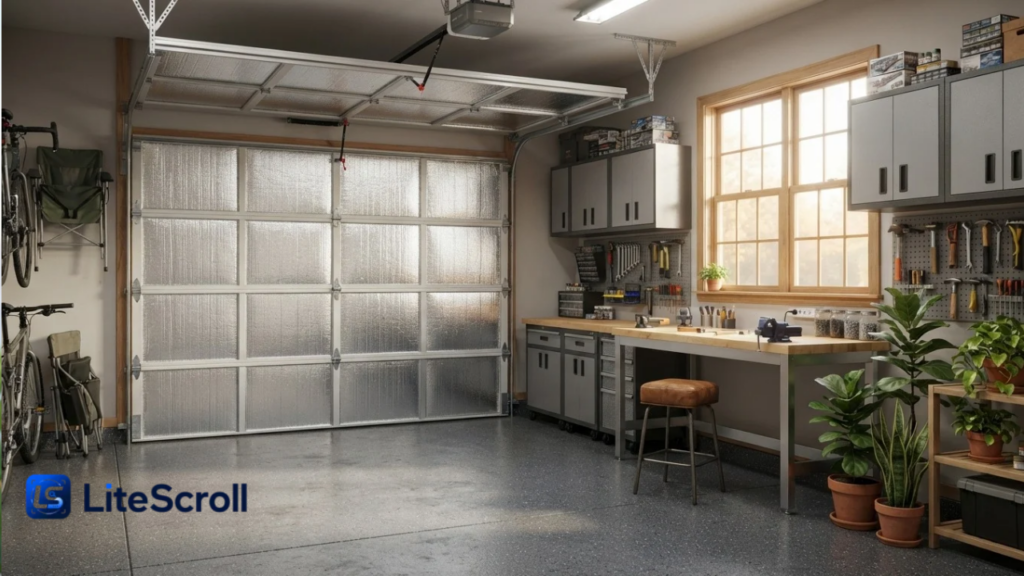
A garage can feel like an oven on a sunny afternoon and a refrigerator on a winter morning. Large metal doors absorb and transfer heat, gaps admit outdoor air, and unfinished ceilings or walls can add to the problem. A practical garage door heat-control solution addresses the biggest source of discomfort without promising to turn an unconditioned garage into a climate-controlled room.
Start by identifying when the space becomes uncomfortable. Does direct afternoon sun strike the door? Is there a noticeable draft at the bottom? Do you use the garage as a workshop, laundry area, or storage space? The answers help you choose upgrades that fit your door, climate, budget, and safety requirements. The seven approaches below cover insulation, sealing, ventilation, and simple ways to measure improvement.
Why Garages Gain and Lose Heat So Quickly
Heat moves by conduction through solid materials, convection through moving air, and radiation between surfaces. A sunlit metal door can become warm and transfer energy inward. At the same time, worn weatherstripping allows hot or cold air to enter around the edges. A garage door heat-control solution should address the mechanism that actually dominates your situation rather than assume every product works the same way.
A detached garage and an attached garage also have different priorities. In an attached structure, walls and ceilings shared with living areas deserve attention because heat, air leakage, and potential pollutants can cross that boundary. The garage itself is normally not conditioned like a living room, so changing one surface may improve comfort without producing a measurable reduction in household utility bills.
1. Choose Insulation That Matches Your Door
A garage door heat-control solution often begins with the largest exposed surface: the door panels. Common retrofit choices include rigid foam boards, purpose-made panel inserts, and reflective foil products. Their performance depends on construction, fit, attachment method, and how they interact with the existing door. A well-fitted product is more valuable than a material selected solely because its packaging advertises an impressive figure.
Understand Reflective Barriers Versus R-Value
R-value describes resistance to conductive heat flow. Reflective products primarily reduce radiant heat transfer when their low-emissivity surface faces an appropriate air space. The U.S. Department of Energy notes that this air-space arrangement is essential to reflective insulation performance. A garage door heat-control solution using foil should therefore be assessed as an installed system, not by treating a radiant-reflection percentage as an R-value. Building Science Education
Consider a Purpose-Built Residential Kit
Homeowners exploring a garage door heat-control solution can review AtticFoil’s BlueTex residential garage door insulation kit. The manufacturer describes a thin reflective product for sectional panel doors, with 22-inch-wide rolls, bonding tape, seam tape, and optional mechanical fasteners. Its published radiant-heat claim depends on a specified air space; it is not a guarantee of a particular garage temperature. Verify current kit options and door dimensions before ordering. AtticFoil® Radiant Barrier
The manufacturer also distinguishes residential sectional doors from other designs. Check the panel count, hinge spacing, and clearance as well as the total width. Never cover hinges, tracks, warning labels, or other operating hardware simply to make an insulation piece fit.
Ask About Added Weight Before Installation
Even lightweight materials add mass to a moving assembly. Garage door springs are selected to balance a particular door weight, and the Door & Access Systems Manufacturers Association warns that alterations can affect the springs, opener, tracks, and warranty. Before choosing any garage door heat-control solution attached to the panels, obtain the original door manufacturer’s guidance and arrange a professional balance assessment if changes are approved. Do not adjust torsion springs yourself. DASMA
Why Door Balance Matters
An opener cannot safely compensate for an improperly balanced door. If operation becomes uneven, noisy, or unusually difficult, stop using the system and have a trained technician assess it.
2. Repair Gaps Around the Door
Insulation cannot compensate for large openings that let outdoor air flow freely. Examine the bottom seal, side seals, and top perimeter while the door is fully closed. Daylight around the edges, visible gaps, or noticeable drafts may indicate worn weatherstripping, an uneven threshold, or a door that needs professional adjustment.
A garage door heat-control solution may be as straightforward as replacing a damaged bottom gasket with a compatible part. Choose seals designed for your door and floor conditions. A threshold seal can sometimes help with minor floor irregularities, but it should not obstruct proper closing, drainage, or safety features. If the door is misaligned, request service instead of forcing a thicker seal into place.
Preserve Safe Operation and Required Ventilation
Do not seal a garage so aggressively that you block required ventilation openings or compromise appliances that need combustion air. An attached garage must also remain separated from occupied rooms as required by applicable building codes. Repair damaged fire-rated assemblies with code-appropriate materials, and never route garage air into household HVAC return ducts.
3. Address the Ceiling and Shared Walls
Sometimes a door retrofit helps less than expected because the ceiling, attic, or walls remain poorly insulated. Look for exposed framing, unfinished surfaces, and openings around service penetrations. The best garage door heat-control solution is part of a sensible plan for the surrounding building envelope, especially when a bedroom or other occupied room sits above the garage.
The Department of Energy recommends attention to air sealing at garage boundaries shared with conditioned living space. A qualified contractor can assess insulation needs, moisture management, and code-compliant fire separation. Do not cover wiring, recessed fixtures, or vents with an unsuitable insulation product. Materials for ceilings and walls should be selected for those assemblies rather than copied from a door kit. Department of Energy
Think About Where Heat Is Entering
For example, a west-facing door may be the main source of afternoon radiant heat, while a room above the garage may be affected more by inadequate floor insulation. A garage door heat-control solution will not correct every thermal weakness in the building. Address the most influential surface first and reassess conditions before making additional purchases.
4. Reduce Direct Solar Exposure
Sunlight can heat an exterior door before that energy reaches the garage. If local rules and the property layout allow it, shading may complement insulation. Options include a properly placed awning, suitable exterior landscaping, or changes that reduce afternoon exposure without interfering with the overhead door’s travel.
A garage door heat-control solution that combines shade with appropriate insulation can address more than one path of heat gain. However, avoid fastening heavy shade structures to the garage door or track. Verify wind loads, clearance, drainage, and homeowner-association requirements before installing exterior additions. A nearby tree may provide shade eventually, but roots and branches also need adequate space from the building.
5. Manage Airflow Without Bringing Fumes Indoors
Ventilation may help remove accumulated heat when outdoor air is cooler than garage air. It may be less effective during very hot or humid periods. Fans circulate air but do not, by themselves, lower its temperature below the incoming air temperature. Make decisions using actual conditions rather than assuming any moving air creates meaningful cooling.
A garage door heat-control solution should never rely on blowing garage air toward living spaces. Vehicle exhaust, fuel vapors, and stored chemicals make attached-garage air different from ordinary household air. Do not idle a vehicle in a garage, even with the main door open, and do not modify required ventilation or fire-separation features without qualified advice.
Know When Mechanical Cooling Is Appropriate
If the space is regularly used as a hobby room or workshop, ask a professional whether an appropriate, code-compliant heating or cooling system makes sense. The answer depends on insulation, electrical capacity, moisture, and intended occupancy. A garage door heat-control solution may reduce unwanted heat transfer, but it does not replace proper equipment sizing or safe ventilation design.
6. Control Moisture and Protect Stored Items
Humidity changes how a garage feels and can contribute to condensation on cool surfaces. In some climates, bringing warm humid outdoor air inside can make moisture problems worse. Look for water intrusion, poor drainage, damp cardboard, rust, or a musty smell before assuming the problem is purely temperature-related.
Choosing a garage door heat-control solution should include checking that materials will not trap moisture against vulnerable surfaces. Follow the product’s installation instructions and address leaks before covering damaged areas. Store paints, batteries, electronics, and other temperature-sensitive belongings according to their own safety and storage guidance; insulation does not guarantee stable indoor temperatures.
Avoid Overstating Energy Savings
A cooler-feeling garage does not automatically mean a large reduction in electricity use. Savings depend on whether the space is conditioned, how the house and garage connect, local weather, and which surfaces were improved. Treat precise savings percentages or guaranteed temperature drops as claims that need evidence from comparable installations.
7. Measure Results and Maintain the Upgrade
Before spending money, record indoor garage temperature and outdoor temperature at similar times over several days. Note sun exposure, whether the door is open, and whether appliances or vehicles have recently added heat. After installing a garage door heat-control solution, repeat the observations under reasonably comparable conditions. This simple comparison cannot isolate every variable, but it can reveal whether the change seems worthwhile.
Inspect any new material after the door has operated normally for a short period. Look for loose edges, rubbing, blocked moving parts, or unexpected noise. Stop using the door and request professional attention if it moves unevenly, reverses unexpectedly, or appears out of balance. Routine inspections help prevent a comfort upgrade from becoming an operating problem.
A Practical Purchase Checklist
Before choosing a garage door heat-control solution, confirm the following:
- Door style, panel count, dimensions, and available clearance.
- Permission from the door manufacturer for the proposed added material.
- Compatibility with springs, opener, hinges, braces, and safety systems.
- Whether the product needs an air gap to deliver its claimed performance.
- Suitable installation materials and moisture considerations.
- Realistic comfort goals instead of guaranteed temperature reductions.
- Warranty conditions and the need for professional inspection.
Frequently Asked Questions
Does insulating the door make the whole garage cool?
Not necessarily. A garage door heat-control solution can reduce heat transfer through the door, but outdoor air, roof exposure, walls, and ventilation still affect the space. Results vary with sun exposure, construction, and climate. An unconditioned garage will still respond to outdoor temperatures.
Is reflective foil the same as thick foam insulation?
No. Reflective foil chiefly addresses radiant transfer under the correct installation conditions, while bulk insulation provides conductive thermal resistance. The right garage door heat-control solution depends on the door design, available air space, and which heat-transfer pathway you want to reduce.
Can I install a kit without changing the springs?
That depends on the original door and the added weight. Never assume a small kit is harmless. Before installing a garage door heat-control solution, seek the manufacturer’s approval and a qualified door technician’s advice about balance, opener compatibility, and warranty implications.
Will weatherstripping help in winter too?
Yes, compatible weatherstripping can reduce unwanted drafts in both hot and cold weather. A garage door heat-control solution that addresses air leakage may improve comfort, although damaged panels or poorly insulated shared walls can still cause substantial temperature swings.
Can I insulate a roll-up or commercial door with a residential kit?
Not automatically. Residential sectional panels and commercial roll-up designs move differently. A garage door heat-control solution must match the actual door type, manufacturer requirements, clearances, and intended installation method. Ask the product supplier before buying a kit for an unsupported design.
How soon should I expect lower energy bills?
There is no universal timeline or savings figure. A garage door heat-control solution may improve comfort without noticeably changing household energy use, especially if the garage is unconditioned. Track utility trends over comparable weather periods and consider other envelope improvements if the goal is lower bills.
Conclusion
Better garage comfort starts with identifying where heat enters, escapes, and accumulates. A well-chosen garage door heat-control solution can be useful, particularly when a sun-exposed door is a major contributor, but installation details and door safety matter just as much as the material. Combine the right insulation with sensible sealing, shade, and moisture control rather than expecting a single product to solve every issue. Measure the results and consult a qualified professional whenever an upgrade could affect the door’s balance or safe operation.